
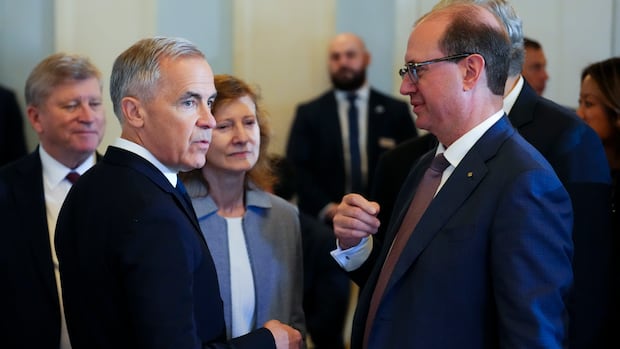

Canada’s envoy to the United States emphasized the necessity of reinstating American alcohol in Canadian stores as a critical step in finalizing an agreement with the U.S. to avoid potential tariffs, as per information obtained by CBC News. Ambassador Mark Wiseman conveyed this message during a detailed briefing to approximately 100 members of the Canada-U.S. trade council, comprising various businesses, industry bodies, and labor unions.
The ongoing discussions in Washington involve Canadian officials striving to avert a looming imposition of 50% tariffs on billions of dollars’ worth of Canadian exports by the U.S. administration, with the deadline set for midnight Friday. Wiseman indicated during the virtual meeting a potential consensus to sidestep the new tariffs, as disclosed by sources familiar with the call.
Reportedly, around 35 Canadian personnel are currently stationed at the Canadian Embassy in Washington, engaged in fine-tuning the language of a probable agreement. Wiseman expressed the anticipated terms of the deal, which include reductions in tariffs on steel, aluminum, and automobile imports, alongside modifications to the governance of dairy import licenses.
Following Wiseman’s departure from the call, former Canadian chief trade negotiator Steve Verheul voiced reservations about the proposed deal to the council. Verheul, a seasoned negotiator who previously spearheaded talks culminating in the Canada-U.S.-Mexico Agreement and the former NAFTA renegotiation, cautioned against conceding too much in the current negotiations.
Verheul’s concerns centered on the potential long-term ramifications of accepting certain sectoral tariffs and making significant concessions at a critical juncture. He underscored the importance of maintaining leverage for future negotiations, particularly within the framework of the CUSMA review, to prevent additional demands from the U.S.
The proposed agreement is expected to see a reduction in steel and aluminum tariffs from 50% to 25% by the U.S. Additionally, there are plans to lower tariffs on Canadian-manufactured vehicles from 25% to 15%, with provisions for American components. The news that the automotive sector would not receive the exemption it sought for Canadian-produced content reportedly drew reactions from participants on the call.
Verheul stressed the need for Canada to explicitly reject the legitimacy of the Trump administration’s sectoral tariffs and reinforce its commitment to achieving duty-free trade in the upcoming CUSMA review. He highlighted the lack of adequate consultation with affected industries and expressed concerns over the disparity in briefing levels between the Canadian and American industries.
The call also featured insights from another council advisor, former finance minister Chrystia Freeland, who cautioned about the challenges of reversing tariff agreements once in place. Freeland, instrumental in the CUSMA negotiations, highlighted the significance of carefully navigating the trade talks to safeguard Canada’s interests in the long run.