
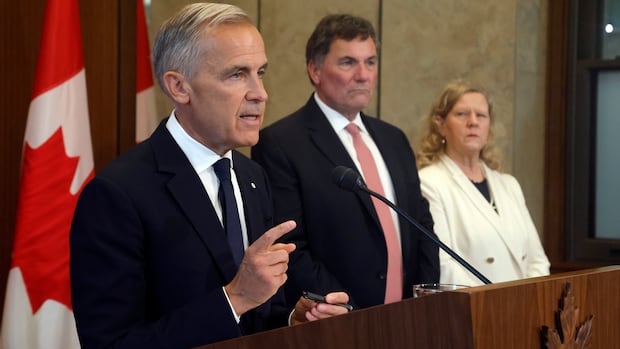

After a week of intense negotiations, Prime Minister Mark Carney addressed the public on Saturday morning to clarify the reasons behind Canada’s decision to walk away from a trade deal with the United States. Carney expressed disappointment over last-minute changes proposed by American negotiators, which he deemed unfair and economically unviable.
The abrupt halt to the discussions was announced late on Friday night, with U.S. Trade Representative Jamieson Greer stating that Canada had opted not to finalize the agreement. This turn of events followed a prolonged period of uncertainty and speculation about the terms of the deal.
While the specifics of the rejected deal remain unknown, concerns have been raised about the potential impact on Canadian interests. Experts like former chief negotiator Steve Verheul and former foreign affairs minister Chrystia Freeland have voiced apprehensions about the concessions made by Canada and the implications of accepting U.S. tariffs.
The imposition of new tariffs by the U.S. is expected to have significant consequences, potentially leading to job losses for thousands of Canadians. The current chief negotiator, Janice Charette, has warned that escalating tariffs could complicate future negotiations and strain relations between the two countries.
The breakdown in trade talks has left both Canadian and American officials in a precarious position, with uncertain outcomes ahead. The evolving landscape of international trade, characterized by protectionist measures and shifting alliances, presents challenges for both countries.
In light of these developments, the future of Canada-U.S. relations remains uncertain. Carney acknowledged the changing dynamics with the U.S. and emphasized the need for a fair and reliable economic partnership. The road ahead may involve continued discussions, but the recent setback underscores the complexities of negotiating with an evolving American administration.
As both countries navigate the aftermath of failed trade talks, questions linger about potential retaliatory actions, the resumption of negotiations, and the terms of a possible agreement. Carney’s stance on prioritizing a beneficial deal over no deal at all resonates with the cautious approach taken by Canadian officials.
The current situation reflects a broader shift in global trade dynamics, where traditional alliances are being reevaluated, and economic partnerships are being renegotiated. Despite the challenges posed by the breakdown in negotiations, both Canada and the U.S. remain committed to finding a path forward that serves their respective interests.