
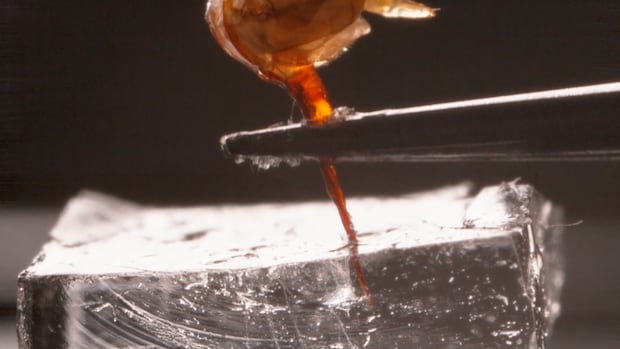

A western honey bee’s stinger is a final defense tool, meant to puncture and inject venom into flesh, often resulting in the bee’s death. Recent research in the Proceedings of the National Academy of Sciences is shedding light on the effectiveness of this mechanism. Fiorella Ramirez Esquivel, a postdoctoral researcher at Macquarie University, utilized high-speed cameras to capture bee stingers in action, a feat made possible by modern camera technology.
The study involved filming the stingers at hundreds of frames per second to capture the swift bee stinging process. By exploiting the translucent nature of the venom sac and stinger, researchers could illuminate the internal structures with strong lighting. Live honey bees were used in experiments, where their stingers were removed and the bees were promptly euthanized due to the stinger’s limited activity time once separated from the bee’s body.
The research revealed a unique “double piston design” in the stinger, where specialized valves simultaneously drive the stinger deeper while continuously pumping venom into the target. This intricate process, likened to a choreographed dance, was replicated using 3D printing for a better understanding of the valve movements. The study also found that bee stingers can exhibit twitches and minor movements for up to 15 minutes post-sting.
The defense mechanism of the western honey bee involves sacrificing part of its body, known as autotomy, to protect its colony, acting as a cohesive “superorganism.” This drastic defense strategy, where workers help safeguard the colony at their own expense, sets the western honey bee apart from other bee species. The study also highlights the role of pheromones released by honey bee stingers to recruit other bees in defense.
While the defense mechanism may not always be effective against tougher targets, the presence of barbs and continuous penetration enhances the bee’s chances of deterring threats. The study’s findings could have potential medical applications, as the continuous venom flow mechanism differs from conventional syringe systems.
The research prompts questions about other honey-producing bee species, particularly those native to the Americas, that lack stingers, sparking curiosity about the evolution and survival strategies of different bee species in the wild.