
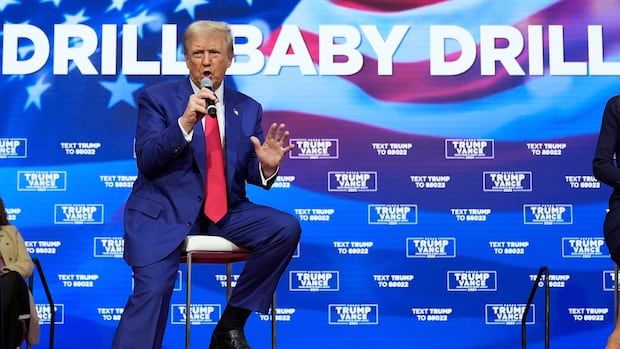

During his 2024 campaign for the U.S. presidency, Donald Trump vowed to take extensive measures to support the oil sector. His rallying cry was: “Drill, baby, drill.”
However, his decisive actions since returning to the presidency have paradoxically produced contrary results. Although oil firms enjoy substantial profits, the tariffs imposed on China and the price spikes stemming from the conflict he initiated with Iran in February have prompted numerous nations to explore the benefits of renewable energy.
“This is basic economics. When you elevate the price of a commodity and increase its risks, you drive individuals to seek alternatives,” remarked Kingsmill Bond, director at the global energy think tank Ember. “That is precisely what is occurring.”
A prime example is the surge in electric vehicle adoption. A recent report published last month by the International Energy Agency (IEA) indicated that the global electric vehicle market experienced a resurgence in the second quarter of this year, despite a downturn in overall car sales.
Data from Ember revealed that electric vehicle exports from China, the leading EV manufacturer, surged between March-May 2025 and March-May 2026 — with increases of 117 percent in Brazil, 127 percent in South Korea, 175 percent in Australia, and 220 percent in Italy.
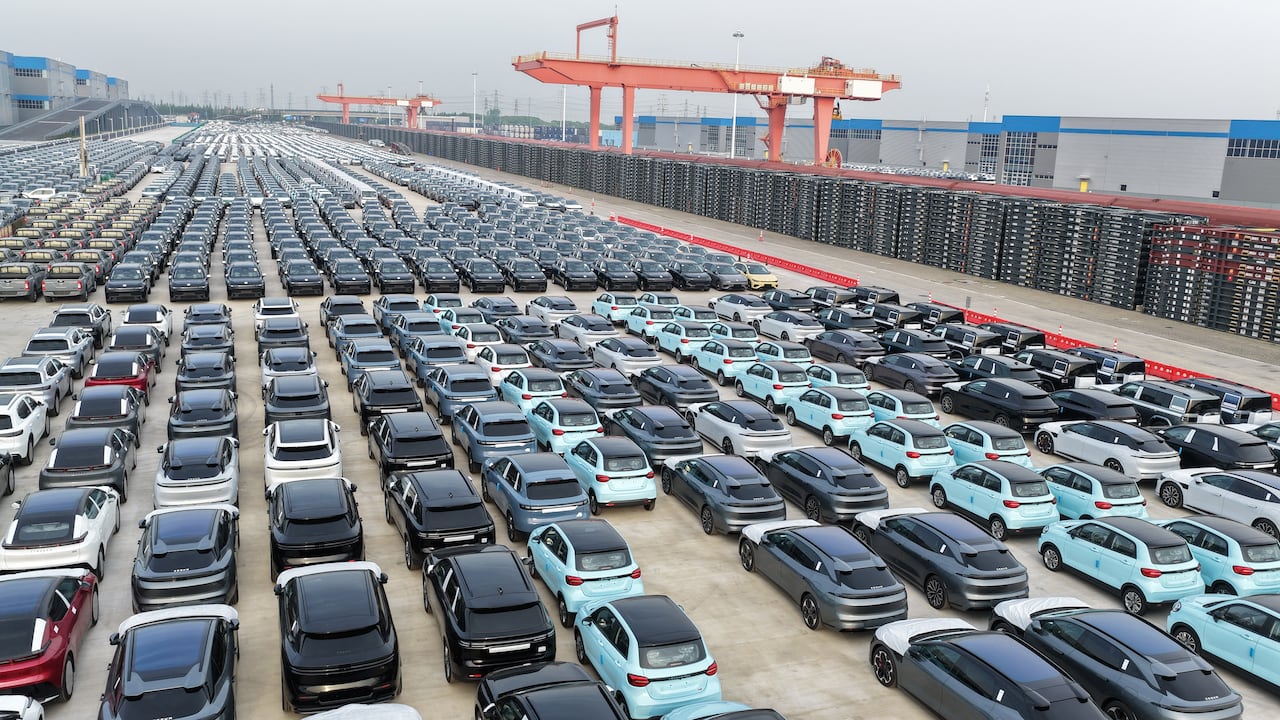
Chinese-made vehicles, including Zeekr cars, wait to be shipped for export at the Port of Taicang in Suzhou, China, on April 27, 2026. (AFP/Getty Images)
Nations are also modifying their energy infrastructures in response to these developments. Earlier this year, the U.K.’s largest energy provider disclosed a 50 percent year-over-year rise in solar panel sales, while increasing energy prices in Asia have prompted a boost in rooftop solar installations. Even as Canada seeks to enhance investment in pipelines, the government has rolled out a nuclear initiative aimed at doubling the electrical grid’s capacity by the year 2050.
“Electric vehicles, batteries, and solar panels are flying off the shelves because people are looking for alternatives,” Bond stated.
Nations Pursuing Energy Independence
As Bond highlights, the larger shift towards renewable energy has been in motion for some time. In its 2025 review, Ember noted that renewable sources accounted for over one-third of global electricity generation, marking the first time they surpassed coal power in a century.
However, the conflict in Iran has provided a fresh motivation for people worldwide to consider clean energy options.
In response to the U.S.-Israeli assaults that commenced in February, Iran blocked the passage of one-fifth of the global oil supply through the Strait of Hormuz. With oil prices soaring to nearly $120 US per barrel, European Commission President Ursula von der Leyen described it as “the second fossil fuel crisis in just a few years,” following Russia’s invasion of Ukraine in 2022.
“One thing these events are making evident,” she stated. “We’re paying a steep price for our excessive reliance on fossil fuels.”
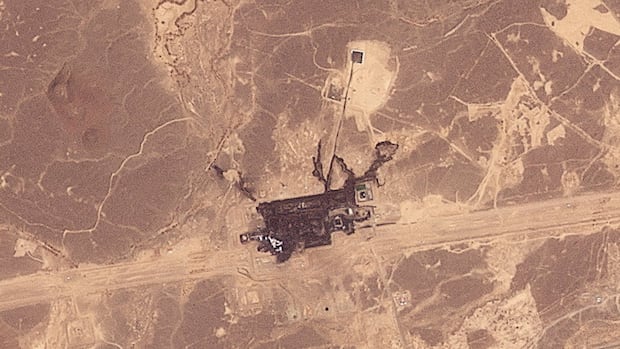
Global oil supply concerns are escalating following a drone attack from Iraq that led to the closure of Saudi Arabia’s East-West pipeline facility in the Hejaz region.
This appears to be a lesson many nations, especially in Asia, have absorbed.
For instance, Thailand is shifting to solar energy due to rising natural gas prices. Shortly after the onset of the Iran conflict, the Philippines declared an energy emergency and its government expedited grid connections and various projects aimed at generating 1.4 gigawatts of renewable energy (sufficient to power about one million households).
From an ecological standpoint, the reactions to the energy shocks caused by the Iran conflict have not all been favorable; coal usage is expected to reach record levels this year, according to the IEA. Certain nations that depended on natural gas have had to transition to coal as their primary energy source for electricity generation, owing to shipping limitations on liquefied natural gas (LNG) through the Strait of Hormuz.
Yet, in some instances, the reactive shift back to cheaper and more polluting coal is occurring alongside a proactive clean transition. Both Pakistan and the Philippines have increased their coal utilization to mitigate some of their gas dependency, but Pakistan has been advancing its solar initiatives for several years, with solar’s contribution to the electricity mix nearly tripling from 2023 to 2025, according to Ember.
Despite most of its LNG supply coming from Qatar, Pakistan’s Power Minister Awais Leghari emphasized that the country’s growth in renewable energy would insulate it from disturbances in the Middle East, stating to Reuters, “Pakistan is not expected to invest in any energy source that could jeopardize its energy security.”
Erica Downs, a senior research scholar at Columbia University’s Center on Global Energy Policy in New York, noted that electrification inherently boosts energy security.
“What nation wouldn’t desire to become increasingly self-sufficient in energy production and supply?”
A study led by Montreal-based Northern Light Capital Partners revealed that by March 30, just a month after the Iran conflict commenced, over 150 nations had announced investments in clean energy for reasons related to energy security.
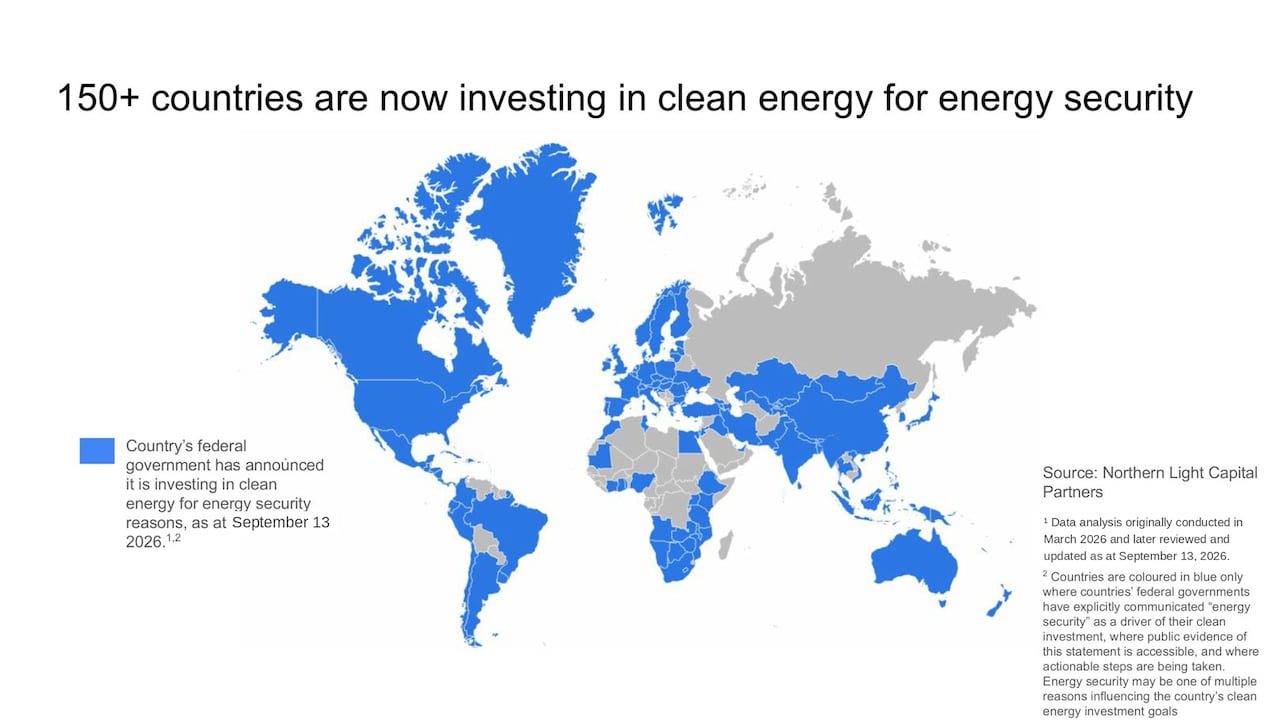
A map indicating all countries that committed to investing in clean energy as a measure of national energy security. (Northern Light Capital Partners)
“The tariffs imposed by the U.S. administration introduced erratic fluctuations into clean energy supply chains,” Joanna Klimczak, founder and CEO of Northern Light Capital Partners, told CBC News. “Meanwhile, the conflict in Iran has significantly accelerated global clean energy investments.”
‘A Long Journey Ahead’
The narrative of the renewable energy transition cannot be discussed without acknowledging China’s pivotal role. The country has rapidly produced solar panels, wind turbines, and electric vehicles.
Early in his second term, Trump imposed substantial tariffs on various Chinese imports, including solar panels. One consequence was that many of these products were redirected to Africa, assisting nations like Rwanda, Senegal, Ivory Coast, and even oil-rich Nigeria in reducing their reliance on fossil fuels such as diesel.
“The cost of equipment decreased when the trade war began. The Chinese were eager to sell,” Fawen Nyakudya, managing director of Zimbabwe-based PFN Solar Systems, shared with German media outlet DW.
Klimczak asserts that due to decades of investment in clean technology manufacturing, China has been well-positioned to meet global renewable energy demands at a crucial juncture.
Downs highlights that unlike the oil crises of 1973 (due to the OPEC embargo), 1979 (the Iranian revolution), and 1990 (the first Iraq war), “there are technologies available today that provide alternatives to fossil fuels that were not accessible in previous decades.”
Not only are these alternatives available, but they are often more affordable to implement than conventional fossil fuels.
According to the International Renewable Energy Agency, since 2010, the installation costs of solar energy systems have decreased by 87 percent, onshore wind by 55 percent, and battery storage costs have fallen by 93 percent.
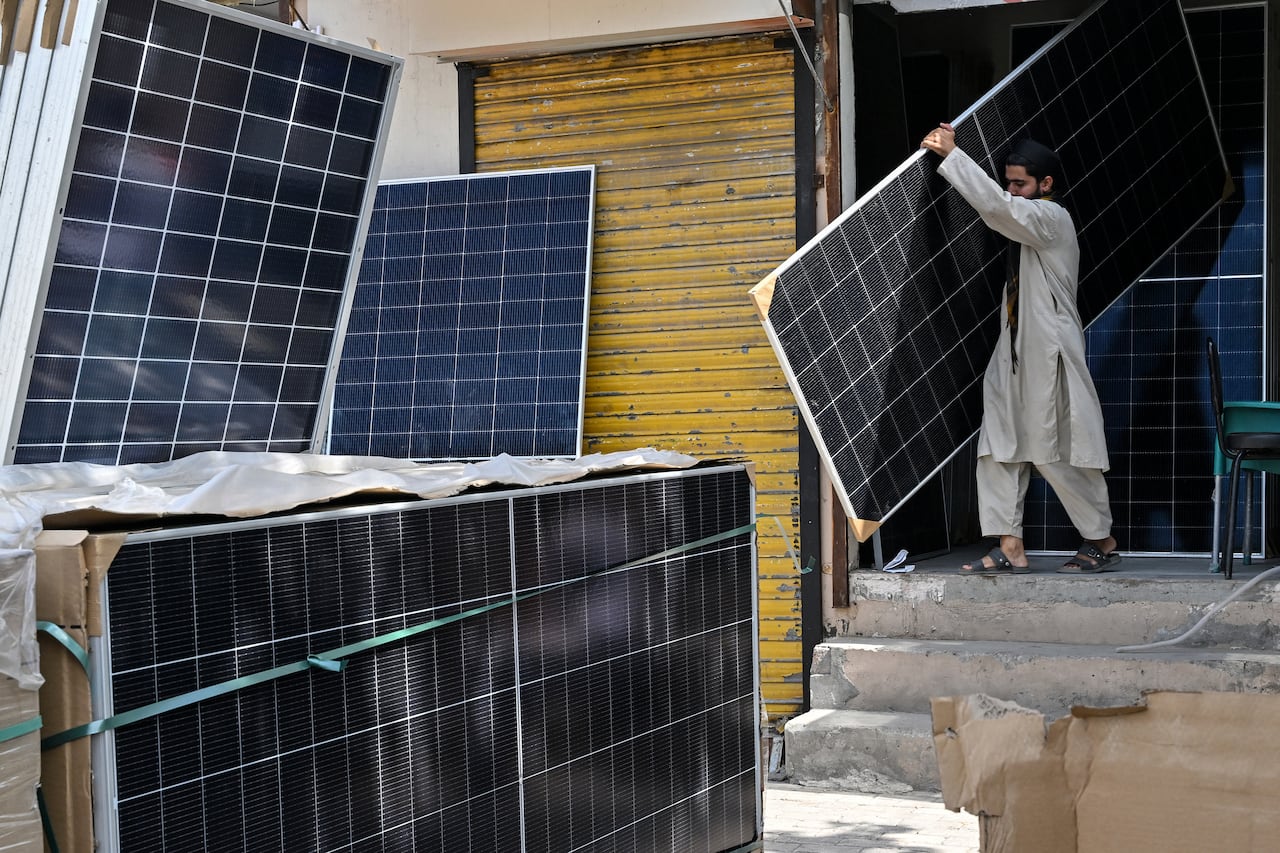
A worker carries solar panel plates at a market in Lahore, Pakistan, on June 12, 2026. (Arif Ali/AFP/Getty Images)
Downs mentions that it is “still somewhat premature to determine” whether Trump’s trade and military actions have had a lasting effect on the global energy transition. A significant question remains whether oil prices reached sufficient heights “to catalyze a more permanent transition to clean technology.”
On Monday, Brent crude oil prices reached $109 US per barrel — the highest level since May. However, oil has not yet attained the elevated prices some analysts had forecast earlier in the year.
“Oil did not reach $200 [per barrel] — nor did it hit $150,” Downs observed. “Some individuals are questioning whether it might actually be beneficial in the long run that prices did not reach such astronomical levels.”
Bond asserts that the energy transition is unavoidable, and events like these hasten the process.
“This is a long journey, not a sprint. The gradual shift from fossil fuels to alternatives has been ongoing for quite some time,” he noted. “And each time there is a disruption like this, it simply motivates people [to adapt] a bit more swiftly.”