

The Australian music industry will now prohibit the inclusion of tracks entirely created by artificial intelligence on the official music charts, according to new rules established by the Australian Record Industry Association (ARIA). ARIA has declared that recordings must have a significant human input to be considered for the ARIA charts. Tracks where generative AI has predominantly generated the creative aspects, such as lead vocals or instruments, will not be eligible. However, recordings where AI has played a minor role alongside a human performance will still be eligible.
ARIA has also stated that it reserves the right to remove recordings suspected of manipulating streams or charts, emphasizing compliance with copyright laws. Tracks produced solely by generative AI will not qualify for the prestigious ARIA Awards. ARIA’s CEO Annabelle Herd emphasized the importance of promoting human artistry in a rapidly evolving industry, stating that the association aims to uphold the transparency of music consumption in Australia.
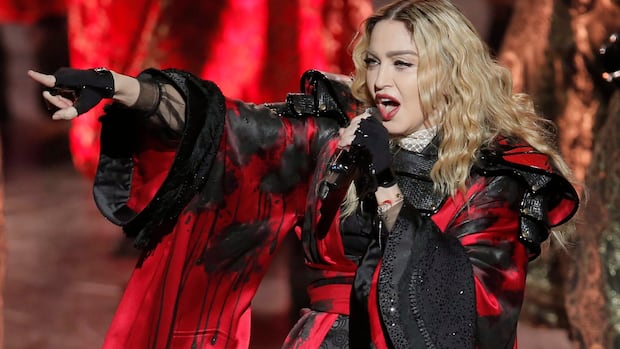
The decision follows the success of Josh Fawaz’s AI-assisted cover of Madonna’s “Like a Prayer,” which stirred controversy after spending weeks on the ARIA charts. The track, featuring AI-generated vocals and drums, has sparked debates over the role of generative AI in music production. Music producer Mitch Thomas criticized Fawaz online, accusing him of exclusively using AI for music production. Fawaz defended his work, stating that AI is merely a tool in his creative process.
Starting next Monday, tracks solely created by AI will be removed from the ARIA charts. However, music with AI assistance will still be considered eligible. ARIA confirmed that Fawaz’s rendition of “Like a Prayer” did not meet the requirements for chart inclusion based on the provided information.