
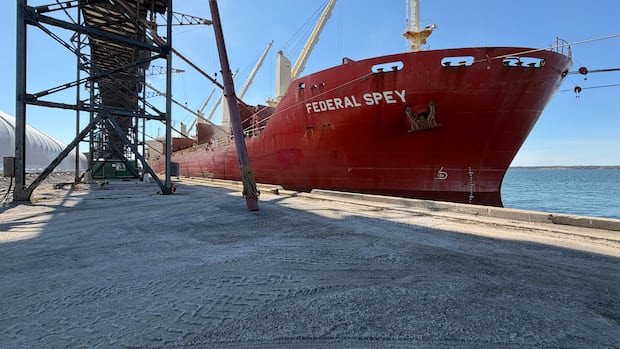

A vessel is scheduled to depart from the Port of Churchill this week carrying the town’s first grain shipment in over five years. Loaded with approximately 30,000 tonnes of Canadian wheat, the ship will be heading to Europe in a significant milestone that officials have been working towards for years.
During a ceremony at the port on Monday, Northern Affairs Minister and Churchill-Keewatinook Aski member of Parliament Rebecca Chartrand described this event as the revival of Churchill as a crucial northern gateway linking the Prairies, Arctic region, and the global market. Churchill’s grain shipments were paused due to the COVID-19 pandemic, with the last one taking place in 2020.
Arctic Gateway Group, the owner of the port and Hudson Bay Railway, had announced in July that grain shipments would resume this summer. Recent studies commissioned by Arctic Gateway suggest the potential for year-round shipping without the need for costly icebreakers as sea ice continues to melt.
Chartrand emphasized that investing in the port is essential for expanding Canada’s market reach amidst changing global trade dynamics and the evolving relationship with the U.S. She stressed the importance of strengthening domestic infrastructure and diversifying trade to reduce reliance on any single market.
Arctic Gateway, a coalition of northern and First Nation communities, anticipates the most diverse shipping season in the port’s history this year. Apart from the grain shipment, the port will also handle zinc concentrate, potash, and a northern resupply vessel bound for Nunavut.
CEO Chris Avery highlighted the neglect the port faced for decades under previous ownership, leading to its closure in 2016. After Arctic Gateway took over operations, shipments resumed in 2019 until the pandemic-induced suspension.
Residents like Katie de Meulles from Churchill are cautious about the increased port traffic’s impact on local wildlife and the environment. Nevertheless, de Meulles, who is Métis, finds reassurance in Arctic Gateway’s Indigenous ownership, hoping that environmental protection remains a priority while balancing economic benefits.
As Churchill sees more commodities passing through its port, discussions about potential expansions and considerations for tourism and environmental preservation continue among residents and stakeholders.