
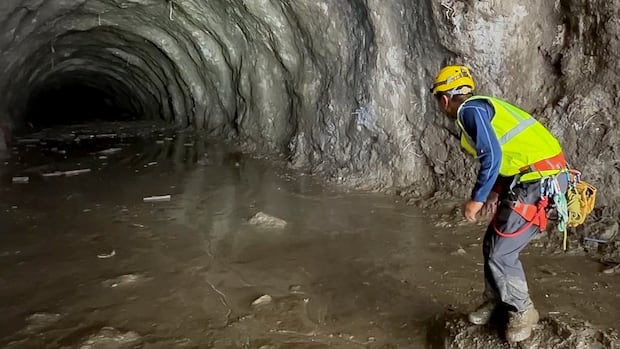

Rescue teams worked urgently on Monday to rescue a large number of workers suspected to be stuck in tunnels at hydroelectric sites submerged in mud due to devastating floods on the Nepal-China border. The death toll in Nepal and China has exceeded 950, with over 4,400 individuals reported missing. A private-sector group representing power companies indicated that roughly 900 workers were unaccounted for at 12 damaged hydropower projects in Nepal’s Rasuwa and Nuwakot districts, with approximately 500 workers believed to be trapped in tunnels. While there is a possibility that some workers have access to oxygen, the likelihood of finding survivors is decreasing. As rescue operations intensified, Nepal’s army confirmed the recovery of four bodies from three mud-clogged tunnels.
Arnold Dix, an Australian tunnel rescue specialist, expressed optimism about finding survivors and aiding in rescue efforts at the devastated hydro project sites. Amid the tragic loss of workers trapped in tunnels, he emphasized the significant impact on Nepal, which has lost many skilled individuals.
Following the disaster last Wednesday, some workers managed to make distress calls, while others who escaped informed authorities and relatives that numerous colleagues remained trapped in the tunnels. Efforts to reach the trapped workers have faced challenges, including a lack of heavy machinery and limited experience in handling such catastrophic events. Despite the difficulties, rescue teams remain committed to the search and rescue mission, refusing to give up hope of finding the missing workers.
Rescue operations have been concentrated on rescuing individuals trapped in the massive tunnels designed for water flow control. The tunnels, large enough to accommodate trucks, pose a race against time as rescuers strive to provide essential supplies to those stuck inside. At the Upper Trishuli-1 Hydropower Project in Rasuwa, where 576 individuals are missing, efforts are underway to reach around 300 workers believed to be trapped in the project’s tunnel. Similarly, at the Trishuli-3 Hydropower Project, teams are working to access a tunnel where individuals are presumed to be trapped.
In China, reconstruction work includes rebuilding the road leading to the Gyirong Port border crossing to facilitate travel between the two countries. The rescue and recovery operations in China have involved various teams, including firefighters and the People’s Liberation Army, with a focus on restoring essential infrastructure. Limited information is available on the Chinese side regarding victims and missing individuals.
The disaster agency in Nepal reported a significant number of fatalities and missing persons, including foreigners, with Canadians among those unaccounted for. Efforts are ongoing to locate missing individuals, with support from Canadian officials working closely with Nepalese and Chinese authorities and international partners.
Family members of the missing individuals continue to hold onto hope for the safe return of their loved ones as search and rescue operations persist in challenging conditions. The catastrophic event, triggered by a glacial collapse, has resulted in widespread devastation in both Nepal and China, emphasizing the urgent need for coordinated rescue efforts and international support.