
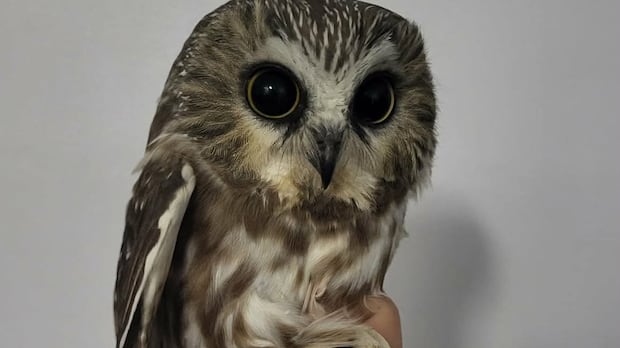

A significant number of owls on the move have brought a surge of activity to the Mugaha Marsh Banding Station in northern British Columbia. This year has been exceptional, with a record-breaking 266 owls caught so far, surpassing the usual count of around 100 for the season. The station faced a challenge due to a shortage of tracking bands, especially in larger sizes needed for saw-whet owls, the primary species targeted.
The station sought assistance from other organizations but found that the owl migration phenomenon was widespread, causing similar shortages at multiple stations. The spike in owl numbers is likely linked to the abundance of small rodents, their main prey, with most captured owls being this year’s hatchlings.
While the current owl population surge at Mackenzie is promising, it may not reflect the overall trend for owl species in the province. Biologist Rémi Torrenta from Birds Canada pointed out that many owl populations have been declining over the past 25 years, including the northern saw-whet owls.
Torrenta explained that the high owl numbers observed this year are part of a documented four-year cycle, where an overabundance of owls leads to a crash in the rodent population the following year. To monitor these trends, Birds Canada coordinates the Nocturnal Owl Survey, a citizen science program that tracks owl numbers annually.
The ongoing banding project at the Mackenzie Nature Observatory plays a vital role in scientific research by providing essential data on owl populations and migration routes. The recent recapture of an owl banded in 2024 in Victoria highlights the importance of such research for understanding owl species and making informed conservation decisions.