
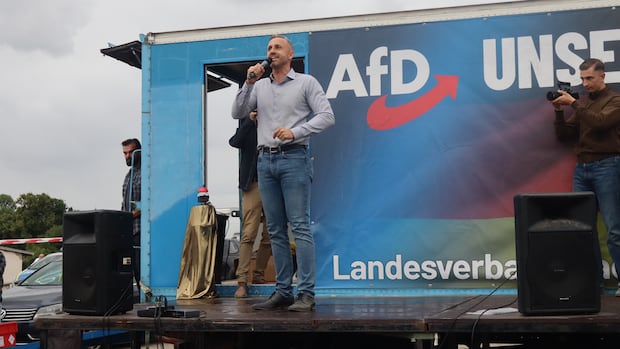

In the serene town of Quedlinburg in eastern Germany, a popular far-right leader, Ulrich Siegmund, addressed a large crowd gathered on a warm August day to discuss the future of the country. Many attendees arrived on Simson motorcycles, which have become a symbol associated with the Alternative for Germany (AfD) party. The AfD is gaining momentum in opinion polls and is poised to potentially become the first far-right party to wield state power in Germany since World War II if successful in the upcoming regional election.
Experts speculate that the AfD could attain significant political influence over state resources, especially in areas like education. Their proposed initiatives include establishing segregated classrooms for refugees, fostering ties with Russia through student exchange programs, and advocating for a patriotism agenda that shifts the focus away from Germany’s Nazi history.
During the gathering in Quedlinburg, Luca Stemmler, a 17-year-old supporter, expressed admiration for Siegmund, calling him an idol. Meanwhile, across the street, counter-protesters waved rainbow flags and sang songs in a display of unity against what they perceive as a threat to fundamental human rights and the democratic order in postwar Germany.
The AfD’s rise in Saxony-Anhalt, where they lead in opinion polls at 42%, has raised concerns among mainstream political parties. The party’s focus on immigration and nationalist sentiments has resonated with a significant portion of the electorate, propelling them to the forefront of the political landscape.
The AfD’s manifesto for Saxony-Anhalt outlines controversial proposals such as banning Pride flags in schools, revising history curricula to highlight positive aspects of Germany’s past, and promoting traditional family values. The party’s stance on issues like remigration and immigration restrictions has stirred debates and ignited fears among immigrants and minority groups in the region.
With the AfD’s potential success, there are apprehensions about the party’s impact at the federal level. If they secure a victory in the state election, they could wield influence in the Bundesrat, the federal legislative chamber, potentially hindering legislative initiatives. The party’s increasing popularity underscores a broader trend of dissatisfaction with mainstream politics and a growing appeal for alternative ideologies.
As the election approaches, the outcome remains uncertain, with implications that could reshape the political landscape in Germany. The AfD’s ascent poses challenges to the established democratic order and raises questions about the future direction of the country’s governance and societal values.