

The rapidly growing trend in video games known as “friendslop” isn’t an insult, but a popular phenomenon. Games like Peak, RV There Yet?, and Meccha Chameleon have gained massive popularity due to their easy-to-understand gameplay, affordable prices, and chaotic multiplayer experience.
According to Patrick Thornley from Langley, B.C., who enjoys playing friendslop games with his friends across Canada, these games involve cooperative gameplay where players tackle seemingly mundane tasks, often made challenging by the group’s playful and sometimes clumsy interactions. The emphasis is on having fun and not taking the games too seriously.
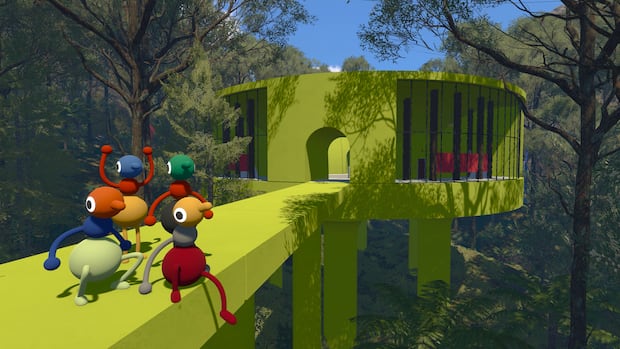
The newly released game, Big Walk, follows the friendslop trend but distinguishes itself by blending emergent chaos with a well-crafted virtual world reminiscent of classics like Myst and The Legend of Zelda: Breath of the Wild. It has garnered attention as a strong contender for game of the year, highlighting the essence of friendship and shared exploration within a video game setting.
The term “friendslop” was popularized by an X user with the handle @wooosaaaahhhhh in 2025, specifically referencing Lethal Company, a cooperative multiplayer horror game. The concept of “friendfarming” associated with friendslop games involves either expanding one’s circle of friends or simply enjoying time with existing friends.
Common traits of friendslop games include their modest budgets, simplistic visuals compared to high-end games like Call of Duty, and straightforward gameplay objectives such as scaling a mountain or driving an RV. These games often integrate proximity chat, altering the volume of player voices based on their distance in the game world, encouraging teamwork and close interactions.
While creating a successful friendslop game is not guaranteed, the genre has seen viral hits like Peak and Meccha Chameleon, with the latter selling 10 million copies within its initial 16 days. Big Walk by Melbourne studio House House, known for Untitled Goose Game, adopts a unique approach by presenting a meticulously designed landscape with collaborative puzzles that challenge players to work together effectively.
Players in Big Walk embody cartoon characters exploring an Australian outback-inspired environment, solving puzzles to progress through the game. The game’s puzzles offer a range of complexities, requiring coordinated efforts and inventive problem-solving strategies. Players must communicate using gestures and actions since traditional communication methods are limited, fostering creativity and teamwork.
In addition to puzzle-solving, Big Walk emphasizes the dynamics of friendship and collaboration over completing tasks, allowing room for detours and spontaneous interactions. While its handcrafted world may diminish replay value after approximately 20 hours of gameplay, the experience promises to be one of the standout gaming experiences of the year.