
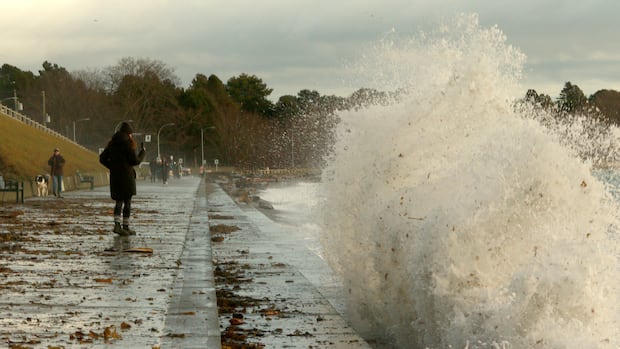

A massive underwater wave associated with this year’s El Niño weather pattern is progressing along the western coast of the Americas, causing concerns among scientists about the amplified effects of climate change on this natural occurrence.
Known as the Kelvin wave, this phenomenon is not surprising. However, it is occurring against the backdrop of human-induced climate change, which has already heated the oceans and atmosphere. A smaller wave made its way to British Columbia earlier this summer, and another stronger one is anticipated to arrive within the next one to two weeks, as per Bill Merryfield, a research scientist at Environment and Climate Change Canada.
The Kelvin wave, like El Niño itself, is a naturally occurring weather event. In typical years, winds blow from east to west along the equator in the Pacific Ocean, pushing water from South America towards Asia. During El Niño years, these east-to-west winds weaken or change direction, allowing the water to move eastward instead.
When these Kelvin waves hit the South American coast, they split and travel along the coasts of the Americas, eventually reaching Canada. Sea-level monitoring data from Tofino on Vancouver Island’s Pacific coast demonstrates the impact of the preceding Kelvin wave in June.
Rather than creating a massive tsunami-like wave, the Kelvin wave causes a temporary elevation in sea levels, resembling a broad, shallow bulge spanning hundreds of miles, raising the ocean’s surface height by about a foot or so, as explained by University of California climate scientist Daniel Swain.
The repercussions of the Kelvin wave are most noticeable during king tides, particularly high tides resulting from the combined gravitational pull of the sun and moon. When coupled with a winter storm causing a storm surge, the additional sea level rise due to El Niño can lead to significant challenges, according to Merryfield.
The compounding effects of the Kelvin wave, intensified northward winds, and winter storms, combined with climate change exacerbating sea levels and extreme weather, could escalate flooding and erosion along the coast. Past strong El Niños have caused widespread erosion on California’s beaches.
Authorities in California are taking emergency measures such as placing sand on beaches, expecting the Kelvin wave to raise water levels by six to twelve inches, as reported by the Associated Press.
Merryfield cautioned that the impacts of the Kelvin wave and El Niño may extend beyond the current season. The release of stored heat from the ocean into the atmosphere during El Niños could contribute to 2027 being the warmest year on record by a significant margin, based on forecasts from various climate research organizations and scientists.