
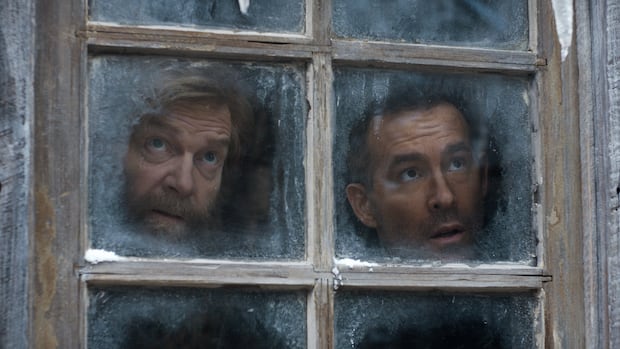

In an era where understanding the humanity of others should be a given, the film “Mayday” explores the concept of empathy and connection across enemy lines. Set in the 1980s, the story unfolds as former KGB agent Nikolai, played by Kenneth Branagh, saves U.S. navy pilot Troy, portrayed by Ryan Reynolds, in Soviet territory. Despite initial skepticism, Nikolai’s altruistic motives become clear as they navigate Cold War dangers and personal challenges.
The film challenges the assumption that people from different backgrounds are inherently unrelatable. It showcases the evolving bond between Nikolai and Troy, highlighting their shared humanity amidst political tensions and personal struggles. This odd-couple action comedy balances humor with action, with Branagh’s charismatic portrayal complementing Reynolds’ quick-witted performance.
Directed by Jonathan Goldstein and John Francis Daley, “Mayday” offers a fresh take on the buddy comedy genre. The film’s cinematography, characterized by long, fluid shots, adds a unique touch to the intense action sequences. Unlike typical Hollywood blockbusters, “Mayday” delves into the complexities of character motivations and moral ambiguity without resorting to black-and-white portrayals of good versus evil.
While acknowledging its place within the realm of propaganda-laden entertainment, “Mayday” presents a nuanced exploration of Cold War dynamics. Through the interactions between Nikolai and Troy, the film prompts viewers to question preconceived notions of heroism and villainy. By humanizing its characters and embracing shades of gray, “Mayday” offers a thought-provoking perspective on the blurred lines between friend and foe.