

A timeless debate in the world of esteemed dramas revolves around the necessity of another period piece. Specifically, the query arises: Is there merit in yet another rendition of Jane Austen’s classic, “Sense and Sensibility”?
For viewers well-acquainted with director Ang Lee’s 1995 adaptation of “Sense and Sensibility,” the inquiry may seem pointed. Austen’s literary works have all seen screen adaptations, with “Sense and Sensibility” alone boasting at least five earlier renditions.
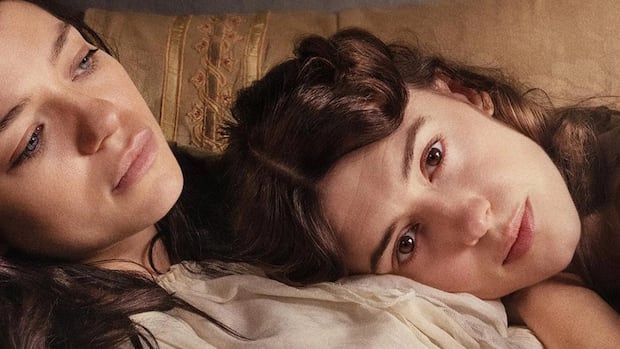
Enter director Georgia Oakley’s take on “Sense and Sensibility,” slated for release on Oct. 16. Featuring Daisy Edgar-Jones as Elinor Dashwood and Esmé Creed-Miles as her sister, Marianne, and penned by Diana Reid, this iteration does not aim to outdo the romance of the 1995 film.
Instead, it delves deeper into the bond between the sisters and the financial insecurities that shape their decisions.
Following their father’s demise, the Dashwood estate transitions to their half-brother, leaving the women with limited financial stability and compelling them to relocate to a humbler abode. During Austen’s era, women’s futures hinged on the benevolence of male relatives or marriage security, rendering this sudden loss of status and stability particularly precarious.
The film’s visual narrative evolves alongside the sisters: departing from the refined elegance of the drawing room to the rustic countryside, amidst inclement weather, mud, and untamed fields.
Engaging in gardening, lengthy walks, beach runs, and pond wading, Elinor seeks solace in sketching and skipping stones, while Marianne often lounges in fields, admiring the sky.
This rugged setting not only underscores their financial vulnerability but also accentuates their shared experiences. Elinor’s composure masks her profound emotions, while Marianne’s candor leaves her more susceptible to heartache. Throughout the film, circumstances prompt each of them to appreciate the other’s viewpoint.
“The sisters are the focal point of the love story,” remarked Edgar-Jones regarding Oakley and Reid’s directorial approach. She expressed that collaborating with her longtime friend Creed-Miles was seamless.
Creed-Miles noted that their bond facilitated a familial, sisterly camaraderie, asserting that she couldn’t have navigated the project without Edgar-Jones’s backing.
The male characters in the new adaptation diverge from the established archetypes in Ang Lee’s 1995 rendition. Herbert Nordrum portrayed Colonel Brandon as awkward and enigmatic, emphasizing the character’s internal struggle to articulate his emotions. This contrasts with Alan Rickman’s 1995 portrayal, which exuded gravitas and an unspoken devotion to Marianne through subtle yet powerful gestures.
In the previous adaptation, Greg Wise depicted Willoughby as a charming romantic figure, heightening the impact of his betrayal. In the 2026 version, Frank Dillane aimed to accentuate Willoughby’s endearing traits—his joy, exuberance, and poetic romanticism—while allowing his questionable deeds to speak for themselves. Dillane portrayed him as a multifaceted young man prone to errors and falling in love.
Juxtaposing the lushness of Lee’s film, Oakley’s rendition is subdued and grounded, refraining from eclipsing its predecessor. It aims to explore the contemporary relevance of these narratives.
Jenner emphasized that Austen’s characters endure as they strive for happiness without compromising their identities. She underlined the importance of recognizing personal happiness and remaining authentic to oneself.
Austen’s stories encompass romance, friendship, family, and the quest to determine a fulfilling life. As audiences emerge from the pandemic, there is a growing yearning for nature, simplicity, and the comforting allure of picnics, books, and blankets, subtly influencing the visual aesthetics of modern adaptations.
Jenner contends that Austen’s narratives transcend eras and aesthetics, offering not just romance but also themes of friendship, family, community, and the intricate process of seeking happiness.
The perennial question of the necessity for another “Sense and Sensibility” endures. Viewers may discover that the allure lies not in outdoing prior versions but in Austen’s enduring tale, which beckons a fresh interpretation.