
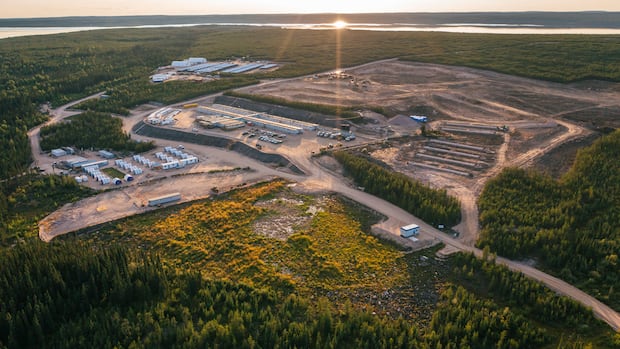

Construction has officially commenced on a new uranium mine in northern Saskatchewan. NexGen Energy Ltd. has initiated the development of an underground uranium mine in the southern Athabasca Basin, situated approximately 130 kilometers north of La Loche. The company plans to invest $2.2 billion during the four-year construction phase of what is anticipated to be one of the world’s largest new uranium sources.
The groundbreaking ceremony for the mine took place on Thursday, with Premier Scott Moe and former prime minister Stephen Harper among the speakers. Local leaders from Metis Nation-Saskatchewan and Desnethé-Missinippi-Churchill River MP Buckley Belanger also participated in the event.
Initial construction activities are focused on surface infrastructure, with shaft development scheduled to commence in 2027. Additionally, the existing 914-meter airstrip is being expanded to 1,780 meters.
NexGen CEO Leigh Curyer reflected on the journey leading up to this milestone. He mentioned the challenges faced when they first arrived in 2012, having to start from scratch. After initial setbacks, significant mineralization was discovered on the eighth drill hole in January 2014, marking the beginning of what Curyer described as a crucial energy project.
The company projects that the mine could yield up to 30 million pounds (over 13,000 tonnes) of uranium annually, contributing around 20% of the current global supply. In March, the Canadian Nuclear Safety Commission granted NexGen a construction license, with an operational license application pending.
Once operational, the mine is expected to create 459 full-time jobs and operate for 24 years. Ongoing exploration in the vicinity suggests the potential development of additional uranium deposits in the future.
NexGen has secured endorsements from nearby Indigenous communities affected by the project, signing benefit agreements with Clearwater River Dene Nation, Birch Narrows Dene Nation, Buffalo River Dene Nation, and Métis Nation—Saskatchewan. These agreements typically include provisions for employment opportunities, training, support for local businesses, and financial benefits.
Premier Scott Moe emphasized the economic opportunities the mine presents for the region, highlighting the potential for long-term careers and community growth. Uranium mining plays a significant role in Saskatchewan, employing over 2,300 individuals, with nearly half of the workforce comprising northern residents.
The development of such resources aligns with Saskatchewan’s strategic goals, ensuring ethical practices that benefit local communities while supporting global energy needs. Denison Mines Corp. is also advancing the construction of the Phoenix uranium mine and mill site in the eastern Athabasca Basin, utilizing innovative in-situ recovery methods. Initial production at the Denison mine is expected to commence in 2028, with estimated capital costs of $600 million.