
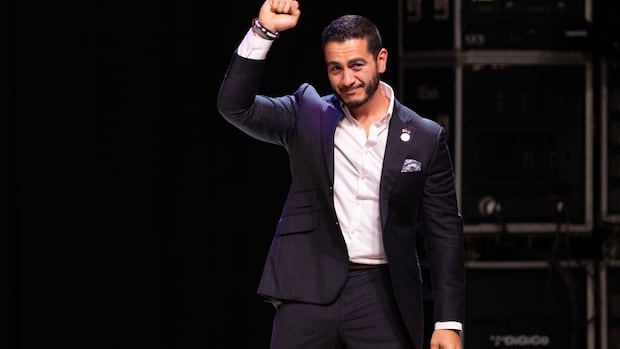

Abdul El-Sayed’s recent triumph in Michigan’s Democratic Senate primary has been hailed as a significant victory for the party’s progressive faction. In a closely contested battle in the pivotal state, the former public health official emerged victorious against Haley Stevens, a moderate contender supported by over $60 million US in campaign funds.
El-Sayed’s win is part of a broader trend of primary successes for Democratic socialist and leftist candidates. Just recently, Peggy Flanagan, a progressive, secured victory in Minnesota’s Democratic Senate primary. However, despite these wins, there are doubts among some political analysts about their impact on the upcoming midterm elections.
The question arises about the Democratic Party’s trajectory and the potential presidential candidates for 2028. In a discussion hosted by Washington correspondent Katie Simpson, joined by Jayme Poisson from Front Burner and Bloomberg’s senior White House reporter Josh Wingrove, diverse viewpoints were presented on the evolving dynamics within the party.
Reflecting on the current scenario, Fareed Zakaria highlighted the need for Democrats to navigate a balance between economic and social issues. While the progressive wing has gained momentum, questions linger about their ability to secure the necessary votes. The comparison was drawn to past electoral patterns, like the 2016 Bernie-Hillary map, suggesting a familiar landscape in the ongoing political landscape.
The emergence of key figures like Alexandria Ocasio-Cortez and Elizabeth Warren as prominent faces of the progressive movement underscores the shifting dynamics within the party. Speculation arises about potential candidates for the 2028 elections and the evolving narrative between progressive, moderate, and establishment factions.
The discussion also delved into the party’s need for rebranding and addressing the frustrations of the electorate. The challenges faced by Democrats in crafting compelling campaigns, avoiding a mere anti-Trump stance, and fostering internal unity were highlighted as crucial aspects for revitalizing the party’s vision and leadership.
As the Democratic Party undergoes a phase of potential generational change, exemplified by the younger candidates in Michigan and beyond, the future trajectory of the party remains uncertain yet promising. The evolving dynamics within the party and the broader political landscape set the stage for a transformative period leading up to the 2028 elections.