
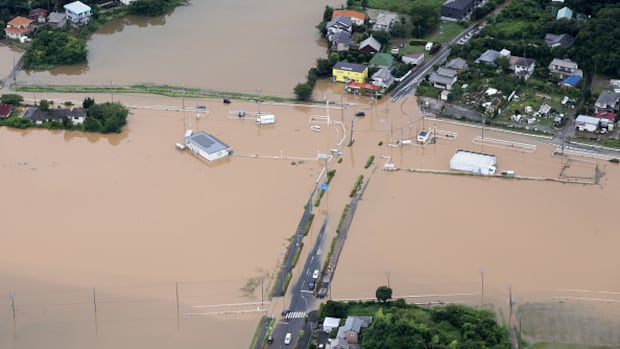

A deluge of rain in Japan left thousands of travelers stranded at Narita airport in Tokyo on Friday. The excessive rainfall led to floods in the area, disrupting transportation, causing power outages in 20,000 homes, and resulting in eight fatalities.
Parts of Chiba prefecture, adjacent to Tokyo, received over 360 millimeters of rainfall within a 24-hour period, causing roads and railways to be submerged. This occurred during a peak holiday period in Japan, leading to significant transport disruptions.
Chiba Governor Toshihito Kumagai described the situation as highly unusual, stating it was unlike any disaster he had encountered before. Among the casualties were individuals affected by a submerged vehicle, as reported by Chiba authorities and the police.
At Narita airport, stranded passengers were provided with essential supplies like sleeping bags, water, and snacks. Many travelers had to spend the night at the airport due to transportation issues, with around 7,000 people affected by the chaos.
One resident, Minoru Yamasaki, shared his experience of facing long taxi queues and hotel unavailability, ultimately returning to the airport for shelter. Despite the challenges, airport officials anticipated most flights to operate as scheduled on Friday.
The heavy rainfall also caused power outages in over 20,000 homes, with a flooded power substation disrupting electricity supply. Gas services for nearly 13,000 households were temporarily halted. In Chiba city, severely impacted by the rain, hundreds sought refuge in government buildings.
Road closures in Chiba resulted in traffic congestion, forcing drivers to seek alternative routes. Additionally, some rail services were suspended on Friday, although limited services between Narita and Tokyo resumed to alleviate congestion at the airport.
Meteorological authorities noted that the 367 millimeters of rainfall in Chiba over 24 hours surpassed the previous record of 309 millimeters set in October 2013. The extreme weather conditions caused significant challenges for residents and travelers in the affected areas.