
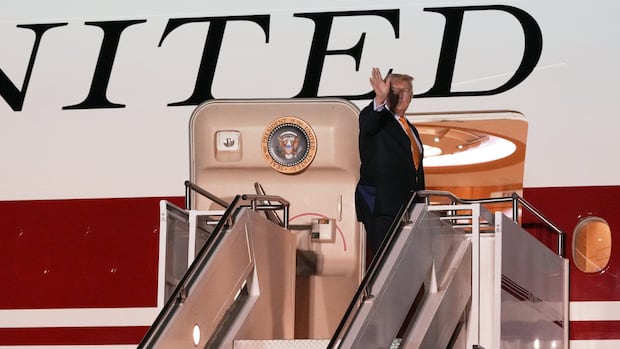

The recent secretive actions involving the departure of U.S. President Donald Trump from a plane in Turkey last month have sparked unusual intrigue and raised unresolved queries. At the conclusion of a NATO summit in Ankara, Trump was surreptitiously moved from Air Force One to a military aircraft using a catering truck. This extraordinary maneuver was reportedly prompted by a threat of assassination from Iran. Surprisingly, the White House did not disclose this transfer, leaving reporters and White House staff on Air Force One unaware. The revelation only came to light when the Washington Post broke the story on Monday.
Accompanied by several close aides, Trump mentioned that the move was directed by the U.S. Secret Service. Former CIA director John Brennan, a vocal critic of Trump, emphasized the ethical obligation of the White House to inform the press pool about such security measures. The decision to switch to the legacy Air Force One for the flight to the U.K. raised eyebrows, especially considering Trump’s previous criticisms of the older planes in service.
The lack of transparency regarding the plane switch has stirred reactions reminiscent of a similar incident in 2000 involving President Bill Clinton. The safety of the journalists covering the trip was a focal point, questioning whether the reporters were exposed to any real danger. The legacy Air Force One boasts advanced defensive systems, but the effectiveness of these systems in real-world scenarios remains uncertain.
Amidst these developments, Democrats have raised concerns and demanded clarity on the circumstances surrounding the plane swaps. The seriousness of the Iranian threat against the President has added a layer of complexity to the situation. The administration’s history of handling security threats and the need for transparency in such matters have become subjects of intense scrutiny.
The evolving narrative surrounding the covert plane transfer underscores the intricate balance between security protocols and public disclosure in high-profile diplomatic missions. The White House’s handling of the situation has reignited debates on presidential security measures and the responsibilities of the press in reporting on sensitive matters.