
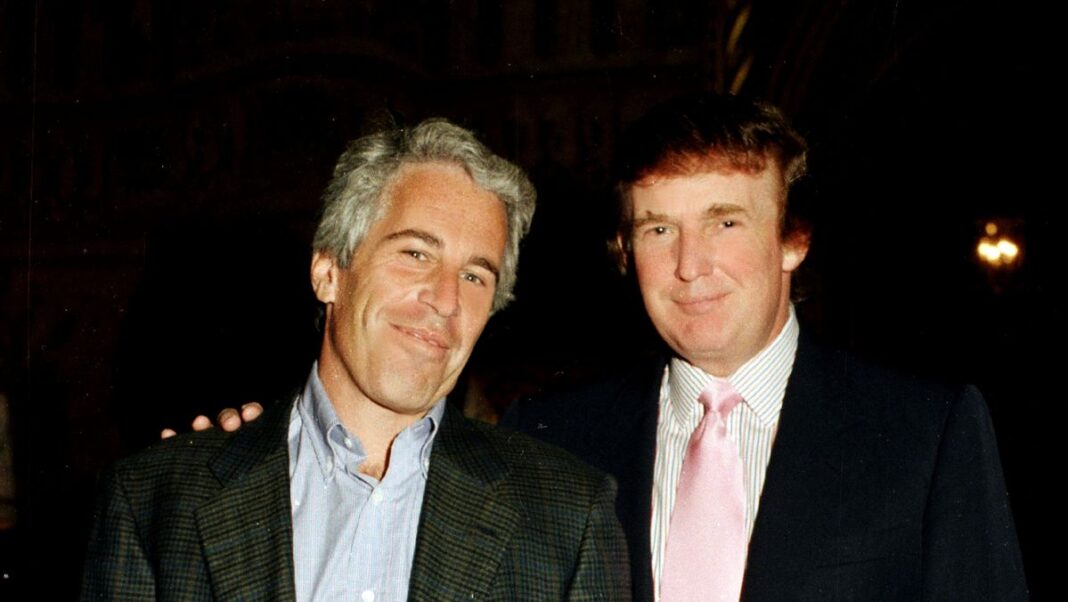

President Donald Trump has emphasized his transparency by calling for the release of the Jeffrey Epstein files and stating that there is no hidden information. Trump, who had been critical of Republican lawmakers, changed his stance upon returning to Washington. Through Truth Social, he labeled the controversy as a “hoax” and directed House Republicans to support the disclosure of the material, emphasizing that the release is crucial to move past what he called a fabricated narrative by the Radical Left.
In a move to reinforce his position, Trump shared statements from David Schoen, Epstein’s former lawyer and a member of his defense team during the second impeachment trial. Schoen asserted that Epstein did not possess any incriminating information about Trump, highlighting that Epstein’s denial of having damaging material on the president should put an end to false accusations. Schoen also referenced Virginia Giuffre’s testimony stating that Trump had not engaged in any inappropriate behavior.
However, Epstein’s previously released emails contradicted Schoen’s assertions, indicating that the sex offender claimed to possess damaging information about Trump. Trump’s reversal of opinion came after a week filled with tension within his party, as he faced pressure for full disclosure. The upcoming vote on the Epstein files has deepened divisions among Republicans and intensified scrutiny of Trump’s handling of the issue.
Despite Trump’s long-standing association with Epstein, he defended the impending release of files, claiming that his administration had already provided extensive documentation. Trump hinted that the files could potentially harm high-profile Democrats, including Bill Clinton. He expressed willingness for the House Oversight Committee to access all legally entitled information, shifting the focus to his key campaign themes such as the economy, immigration, and foreign policy.
Trump showed no signs of reconciliation with Republicans supporting the bill, particularly targeting Thomas Massie and Marjorie Taylor Greene. He continued his public feud with Greene, criticizing her character and loyalty. Trump severed ties with Greene and pledged to endorse a challenger against her in the future. Greene maintained that the public deserves transparency regarding the Epstein files and questioned why the issue was fiercely contested.
While facing internal discord, Trump received bipartisan acknowledgment for backing the vote on the Epstein files. Democrat Ro Khanna commended Trump’s endorsement of the bill, urging the release of the documents. Senate Minority Leader Chuck Schumer called for immediate disclosure of the files. Republicans who endorsed the petition remained silent publicly, with Nancy Mace sharing a video advocating for the exposure of information related to Epstein.
The bill aims to compel the Justice Department to release all records and communications concerning Epstein, including details about the investigation into his death while in federal custody. Sensitive information involving victims and ongoing investigations may be redacted. Massie anticipated substantial Republican support for the bill and hoped for a veto-proof majority. Speaker Mike Johnson, who initially opposed the petition, faced mounting pressure for a vote.
Democrats raised concerns that the swearing-in of newly elected Adelita Grijalva was delayed to prevent her from becoming the crucial 218th signatory. Trump’s evolution on the release of the Epstein files has become a focal point for Greene and other dissenting Republicans in Congress.