
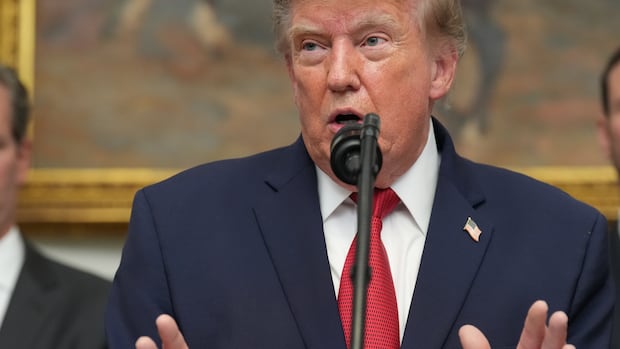

U.S. President Donald Trump declared on social media his intention to initiate what he described as “the MOST CRUSHING ECONOMIC OPERATION EVER TAKEN AGAINST ANY COUNTRY” against Iran. Trump announced on Truth Social that this operation would involve Economic Warfare and Isolation on an unprecedented level, although he provided limited specifics. He cautioned that there would be economic repercussions for any nation that supported Tehran or extended any form of assistance to Iran.
Trump’s message on social media also included a warning that any country permitting its financial institutions, businesses, airports, or government entities to offer support to Iran would face significant economic consequences. While Trump did not outline the exact measures the U.S. would take against such countries, he emphasized the need to halt activities such as oil smuggling, swap lines, cash transfers, exchange houses, and front companies immediately, calling out those who engage in these practices.
In the ongoing conflict that has seen thousands of casualties over the past six months, various countries in the Gulf region have become involved. Iran’s control over shipping routes, particularly through the Strait of Hormuz, a crucial passage for global oil trade, has rattled global markets. Despite two ceasefire agreements between the U.S. and Iran in April and June aimed at restoring shipping flow through Hormuz, these agreements quickly fell apart, even as Israel scaled back its involvement in the conflict.
Trump’s statements and warnings on social media do not always materialize as stated, raising uncertainties about their implementation. Recent developments include conflicting reports of U.S.-Iran talks, with the United Arab Emirates suspending trade activities with Iran following reports of missile launches from Iran, a claim that Iran dismissed as unfounded. China, a significant importer of Iranian oil, could face economic consequences if the U.S. expands its economic actions against Iran, potentially triggering retaliatory measures.
While Iran’s advisor to the supreme leader expressed openness to dialogue with the U.S., he emphasized that Iran would not yield to military pressure or sanctions. Trump denied ongoing talks with Iran, contrasting with statements from Jared Kushner, Trump’s son-in-law and special envoy, who suggested that discussions with Iran were still ongoing and potentially more intense than before.