
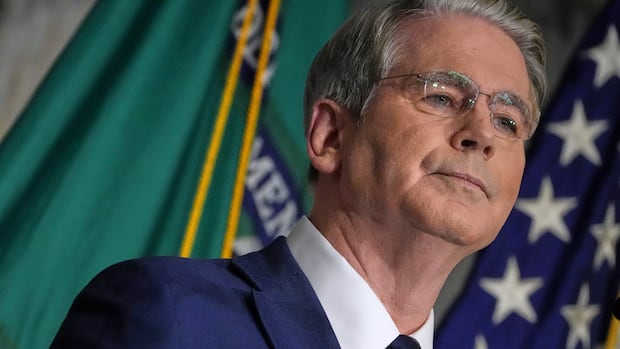

The Trump administration announced an extension of secondary sanctions that can be enforced on entities and nations conducting business with Iran, intensifying economic pressure on Tehran as the conflict approaches its six-month milestone. Treasury Secretary Scott Bessent introduced what he termed an “economic D-Day” during a press briefing, issuing a final warning to countries to sever their business connections with Iran or risk losing access to the dollar-based financial system for key companies and entities.
“We are initiating a comprehensive economic campaign against Iran’s global financial ties. Our goal is to cut off all economic support sustaining this oppressive regime until Tehran stands isolated,” Bessent stated. The U.S. Treasury Department disclosed that it has identified the networks, facilitators, and financial channels Iran employs to smuggle oil and evade sanctions. Collaborating with U.S. allies, Washington is set to target any sources of Iran’s illicit income.
The Treasury Department has taken action against five sectors – digital assets, technology, gold, aviation, and shipping – utilized by the Iranian government to bolster its economy. Additionally, sanctions have been imposed on nearly 60 entities, individuals, and vessels. China has long been the primary purchaser of Iranian oil, and while the U.S. has escalated efforts to curb Chinese acquisitions, it has refrained from designating major Chinese banks facilitating the trade.
Iran issued warnings of potential military retaliation and further reductions in oil exports from the Gulf in response to impending U.S. economic measures. Iranian Finance and Economic Affairs Minister Ali Madanizadeh affirmed readiness for U.S. sanctions, emphasizing Iran’s capability to navigate economic challenges. Brig-Gen. Hossein Mohebbi of Iran’s Islamic Revolutionary Guard Corps (IRGC) vowed severe repercussions on U.S. interests and energy chokepoints if Iran’s infrastructure faces threats.
The ongoing U.S.-Iran conflict, nearing the six-month mark, has driven global energy prices upwards. Despite reduced combat activity, diplomatic endeavors to resolve the conflict have stalled, and the blockage of oil and raw material shipments through the Strait of Hormuz persists, sustaining elevated energy prices. President Trump’s approval ratings have declined significantly, with only 33% of Americans expressing approval in the latest Reuters/Ipsos poll. Trump asserts that the economic repercussions are crucial to prevent Iran from acquiring nuclear weapons.
Sanctions against Iran have been enforced by the U.S. for an extended period, primarily targeting the country’s oil revenues, aviation sector, cryptocurrency activities, arms procurement, and funding for IRGC-affiliated businesses. While these sanctions restrict designated entities from the dollar-based financial system, Iran has managed to swiftly establish new front companies, entities, and vessel registrations to circumvent them.