
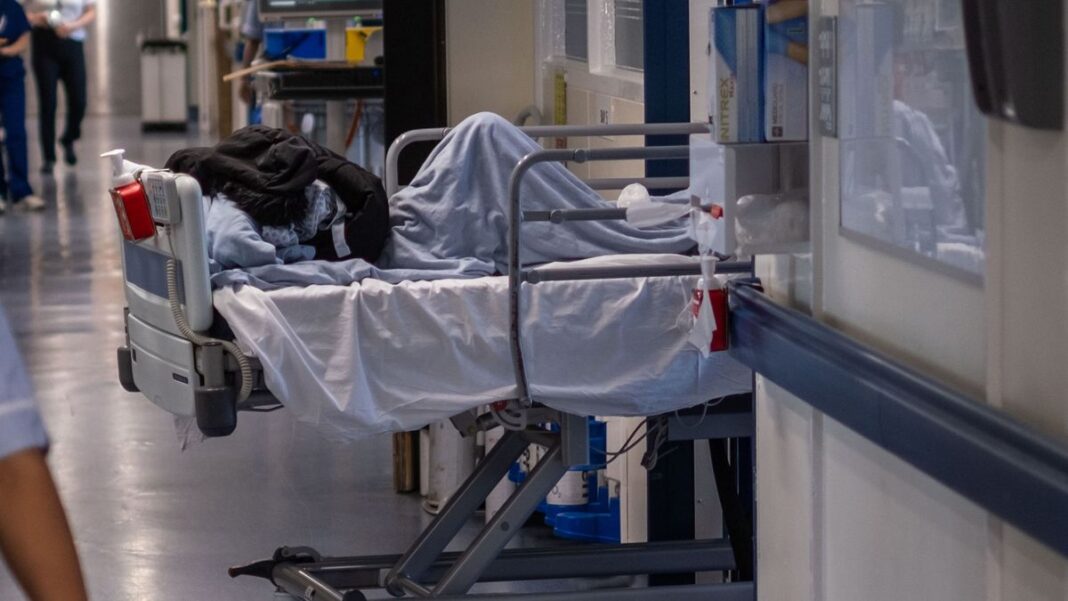

Almost 20% of patients in A&E departments in England this summer were receiving care on trolleys or chairs, according to a concerning new survey released today. The Royal College of Emergency Medicine conducted the research, describing the practice of treating patients in corridors as a matter of national shame and a risk to lives. The survey revealed that 19% of patients were being managed on trolleys or chairs in corridors, with an additional 34% of patients being looked after in ambulances outside A&E departments.
The strain on the NHS was evident as 78% of respondents believed that patients were being harmed due to the compromised quality of care in such conditions. Testimonies from patients expressed feelings of vulnerability and neglect, highlighting the negative impact of corridor care on their confidence in seeking emergency medical assistance.
The Royal College of Emergency Medicine presented the findings to the All-Party Parliamentary Group on Emergency Care, emphasizing the urgent need for improvements. The report echoed concerns raised by Age UK, revealing that elderly patients experienced distress while waiting for care. Dr. Ian Higginson, President of The Royal College of Emergency Medicine, condemned the situation as a national disgrace, emphasizing the detrimental effects on patients and healthcare professionals.
Labour MP Rosena Allin-Khan, who chairs the APPG and works as an emergency doctor, emphasized the urgent need for increased support and resources for the NHS to address the challenges faced in emergency departments. The Royal College of Nursing’s General Secretary, Professor Nicola Ranger, also expressed dismay over the prolonged suffering of patients due to inadequate care standards in emergency departments.
The Department of Health and Social Care acknowledged the severity of the situation, stating that no patient should receive care in corridors. They outlined plans to invest in urgent and emergency care centers, ambulances, mental health crisis centers, and vaccination programs to improve healthcare services. The focus is on ensuring that patients receive timely and dignified care, especially during the upcoming winter season.
The call for better-funded social care and increased resources for the healthcare system is gaining momentum, with stakeholders emphasizing the need for immediate action to address the challenges faced by patients and healthcare professionals.