
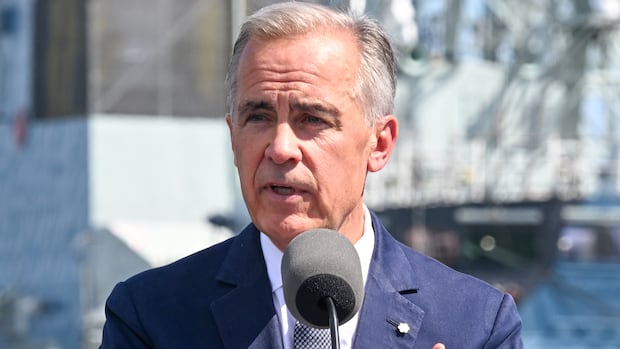

Prime Minister Mark Carney expressed his willingness to resume negotiations with the Trump administration once the U.S. demonstrates a genuine desire for an economic partnership and ceases to view Canada as a subordinate entity. Speaking in Lévis, Que., Carney emphasized the importance of the U.S. approaching the negotiations with a fair attitude towards Canadian industries for productive discussions to take place.
While acknowledging the existing trade agreement between Canada and the U.S. (CUSMA), Carney highlighted the potential for improvements to benefit all parties involved. However, he stressed that ongoing threats to undermine Canadian companies and citizens by the U.S. must cease for progress to be made.
Carney announced Canada’s withdrawal from the negotiating table following last-minute unfair changes proposed by the U.S. that were deemed unfavorable and economically unsound by the Canadian government. These demands would have limited Canada’s ability to engage in trade agreements with other nations and posed threats to French-language media subsidies and bilingual product labeling.
The U.S. imposed 50% tariffs on approximately $28 billion worth of Canadian exports over the weekend, prompting concerns about the future of the economic relationship between the two countries.
Regarding President Trump’s recent tariff threats targeting Canadian automobiles, car parts, and steel, Carney stated that such actions were not surprising and further revealed the administration’s intentions. He criticized the unfair terms proposed by the U.S. during negotiations, emphasizing that protecting Canadian industries was paramount.
Ontario Premier Doug Ford suggested imposing a surcharge on electricity exports to the U.S. in response to the escalating trade tensions. Carney supported the idea, emphasizing Canada’s significance as an energy supplier to the U.S. despite the contentious trade environment.
During a funding announcement event in Lévis, Carney unveiled a $11.3 billion investment for Quebec’s shipbuilding industry to construct new icebreakers for the Canadian Coast Guard using domestically sourced steel. Quebec Premier Christine Fréchette emphasized the need for economic resilience and hinted at potential measures, including surcharges on energy exports to the U.S., to protect Quebec’s interests.
While Carney emphasized the need for fair negotiations and conditions for a return to the table, U.S. Vice-President JD Vance suggested that talks were still ongoing, emphasizing the importance of respectful dialogue.
Vance criticized Canada’s trade policies, labeling Canada and China as the “worst countries” in terms of trade practices. He accused Canada of underinvestment in its military and expressed frustration over perceived trade imbalances with the U.S., highlighting the need for a more equitable trade relationship.