
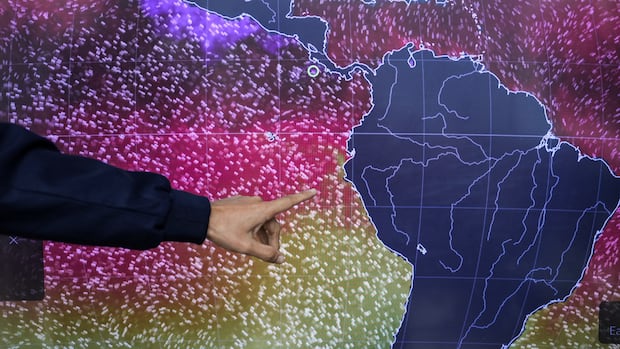

El Niño, a natural climatic phenomenon known for causing periodic spikes in global temperatures, is projected to reach its peak in several months and persist through the upcoming spring, according to experts. The impacts of El Niño are already evident, affecting both weather patterns and human preparedness.
One visible effect is the low water levels observed in the Panama Canal. A lack of rainfall attributed to El Niño has led to decreased water levels in Gamboa, Panama, affecting ship transits through the canal. The Panama Canal Authority has taken measures to manage the situation, with hydrologists monitoring and capping daily transits as El Niño is expected to prolong.
Seabirds, particularly blue-footed boobies, have been displaced near the entrance of the Panama Canal due to the warming of the eastern Pacific caused by El Niño, disrupting marine food sources and habitats for these birds.
Governments across Latin America are actively mobilizing resources and implementing contingency plans in anticipation of the strengthening El Niño across the Pacific region. In Honduras, red and yellow alerts have been issued in multiple municipalities due to climate conditions affecting agriculture and livestock, prompting preparations to mitigate potential impacts.
In Indonesia, the effects of El Niño are being felt differently, with salt farmers in West Java province benefiting from a drought driven by El Niño while crop farmers face challenges from extreme heat. Villagers in parts of Indonesia are struggling to access groundwater due to the prolonged dry season exacerbated by El Niño.
United Nations officials have warned that the intensifying El Niño is likely to result in more extreme weather events globally, exacerbating existing climate challenges. While not directly causing Indonesia’s wildfires, El Niño has provided conditions conducive to their rapid spread, as noted by Indonesia’s disaster mitigation agency chief.
In Canada, models predict a warmer winter than usual due to the strong El Niño, with regions like British Columbia expecting reduced precipitation and snowpack levels. Additionally, a decrease in tropical storms in the Atlantic is anticipated as a typical outcome of El Niño.
As El Niño continues to evolve, its impacts on various regions worldwide underscore the importance of proactive measures and preparedness to mitigate potential risks and disruptions.