

A legal scholar has pointed out several warning signs during the inquiry that led to the wrongful conviction of a man from Nova Scotia, indicating that these should have been caught in time to avert the mistake.
“I was furious,” stated Gideon Christian, an associate law professor at the University of Calgary, in a recent interview.
“This is precisely what I devote an entire semester to cautioning my students against. It is fundamentally incorrect.”
The inquiry that resulted in Brandon Klayme’s conviction initiated in 2018 when the mother of a 12-year-old girl from Wisconsin found that her daughter had shared sexual materials with a man via the Kik messaging platform.
Wisconsin police incorrectly utilized a Kik username during their investigation, which led the Halifax Regional Police to apprehend Klayme, mistakenly believing that his email and IP addresses were associated with the account.
Klayme was taken into custody at his residence in Dartmouth, N.S., in February 2020, with multiple devices confiscated. He faced charges including possession of child sexual abuse material, luring a minor, and distributing sexually explicit material to a child.
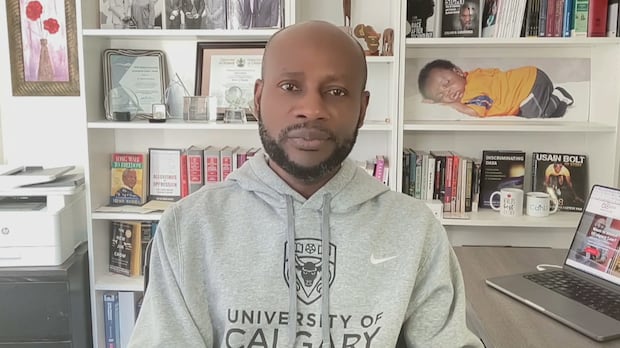
Brandon Klayme spent 18 months in jail for crimes he didn’t commit after an error that passed through multiple legal safeguards. Gideon Christian, an associate professor of law at the University of Calgary, explains what needs to change so it doesn’t happen again.
Christian emphasizes that the absence of evidence on Klayme’s devices represents a significant flaw in the prosecution’s argument, particularly since investigators were aware of the specific messages they needed to locate.
“There were 125 messages retrieved from the victim’s cellphone,” Christian notes, yet none were present on Klayme’s devices.
“Even if he had deleted them, a forensic examination of his devices should have uncovered any deleted messages. None were found,” Christian asserted.
“This is a very strong indication that there was an issue with proceeding in this case at that stage.”
Christian argues that the absent messages were the most evident warning sign, although it was not the only misstep throughout the investigation and trial process.
Following his arrest, a police officer from Halifax Regional Police conducted an interview with Klayme. Typically, these interviews are recorded both audio and video.
“Regrettably, there was a two-week span during which, unbeknownst to anyone until the end of that period, the audio system was malfunctioning,” the officer testified.
Consequently, the evidence stemming from that interview relied solely on the officer’s memory.
During the officer’s testimony, the defense raised objections regarding her interpretation of some of Klayme’s statements. The officer later clarified her account.
“It is certainly troubling that this evidence — the interview evidence — was unavailable,” Christian remarked.
However, he was uncertain how significantly this fact influenced the final verdict.
Halifax Regional Police acknowledged in a statement to CBC News on July 29 that the investigation was “complex, beginning with a police agency in Wisconsin before the assistance of the Halifax Regional Police was sought.”
“In light of the recent court ruling, we are dedicated to reviewing this case and our involvement in its outcome,” the statement indicated.
Christian also expressed concern about Klayme’s insistence on his innocence during sentencing.
“Once convicted, if you continue to assert your innocence, it is often perceived as callous,” he stated, noting that this issue arises in numerous wrongful conviction cases.
At the end of the sentencing hearing, Klayme had a chance to address the victim directly.
He expressed his regret for what had happened to her, while also asserting that he believed someone else was responsible.
“I can assure you that it did not benefit him,” Christian remarked.
Klayme spent 18 months in prison and then an additional 18 months on probation.
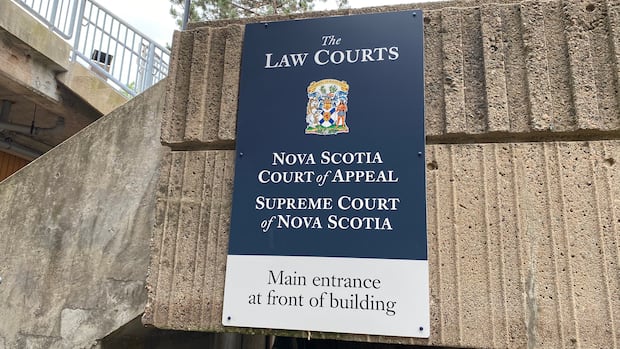
Only earlier this year did Klayme’s legal team identify the username error while preparing appeal arguments. Last month, the Nova Scotia Court of Appeal cleared Klayme of all accusations.
“This is not a case where an acquittal is granted because the Crown was unable to meet the burden of proof beyond a reasonable doubt or where a trial error rendered the verdict unsafe,” the appeal panel stated.
“In this context, Mr. Klayme is factually innocent of the charges. He should never have faced charges, much less a conviction.”
Christian expressed hope that Klayme’s situation could shed light on the severity of wrongful convictions.
“No one deserves to endure what this young man has experienced,” he said.
Earlier this month, Nova Scotia Justice Minister Scott Armstrong announced that the province will look into the events that led to Klayme’s conviction.
“I cannot comprehend how such an event could occur within the system,” Armstrong commented.
On August 6, Armstrong indicated he intends to meet with the Nova Scotia Public Prosecution Service to determine what went awry.
-
‘A subtle mistake’: How a single underscore led to an innocent Halifax man’s conviction
-
Province to investigate Brandon Klayme’s wrongful conviction
The Public Prosecution Service did not agree to an interview request from CBC News but provided a written statement.
“The Nova Scotia Court of Appeal determined that Brandon Klayme is factually innocent and should never have been charged or convicted. The PPS acknowledges the Court’s ruling and understands the grave implications this outcome has had for Mr. Klayme,” the statement conveyed.
“Once new information surfaced, the police shared it with the Court, advocated for its inclusion as fresh evidence, conceded the appeal, and requested the Court to issue an acquittal. The Crown’s duty is not merely to uphold a conviction, but to ensure that justice is served.”
MORE TOP STORIES
-
Researcher studying Acadian wills says they were ‘an act of resistance’
-
‘It was unbearable’: Halifax tenants call for indoor temperature cap
-
West Chezzetcook celebrates the past and future of its culture on National Acadian Day
-
At Canada’s largest keel-boat regatta, advocates hope to see more women ride the wind
-
Adsum House ‘sickened’ by past misogynistic song made by N.S. cabinet minister
Tag: rewrite-pending