
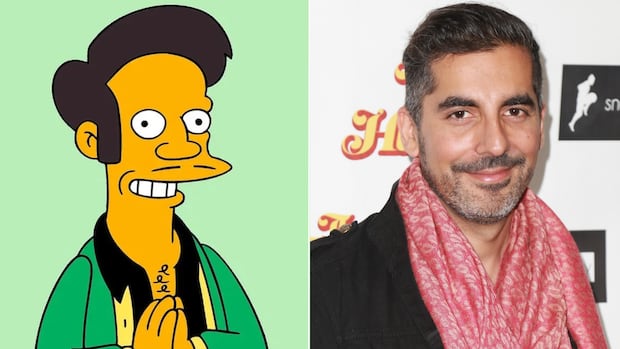

In a recent episode titled “Treehouse of Horror Presents: The Revengening,” Apu Nahasapeemapetilon made his first appearance and spoke on the long-running show “The Simpsons” since 2017. Despite being present in the background in intervening years, he had refrained from speaking due to concerns about perpetuating racial stereotypes.
The character of Apu is now voiced by Sunil Malhotra, an Indian-American actor known for his work in “The Legend of Korra.” This change follows Hank Azaria, a white actor who had voiced Apu for 27 years, publicly apologizing in 2021 for his involvement in portraying the character.
The decision to bring back Apu was kept under wraps until the recent episode aired, surprising fans. Sunil Malhotra, in an Instagram post, expressed that reviving Apu felt like reclaiming the character’s identity and homecoming.
Furthermore, the return of Apu signifies a broader shift in the show’s casting choices. “The Simpsons” announced in June 2020 that characters of color would be voiced by actors from the respective ethnic backgrounds. This move has seen other characters like Carl Carlson and Dr. Julius Hibbert being recast with actors of color, including Alex Désert and Kevin Michael Richardson.
Showrunner Matt Selman mentioned that Apu and his family will have a more prominent presence in future episodes, showcasing character evolution. Sunil Malhotra, reflecting on his initial concerns about taking on the role, emphasized the importance of acknowledging past mistakes and the significance of the character’s return.
The reappearance of Apu sparked a range of reactions on social media. While some fans welcomed the return, others expressed nostalgia for Hank Azaria’s portrayal. The character’s comeback has been described as a “cultural touchstone moment” by Indian-American comedian Rajiv Satyal, who emphasized the importance of representation and opportunities for actors from diverse communities.
Overall, the return of Apu to “The Simpsons” represents a significant moment in the show’s history, reflecting ongoing discussions around diversity, representation, and cultural sensitivity in media.