
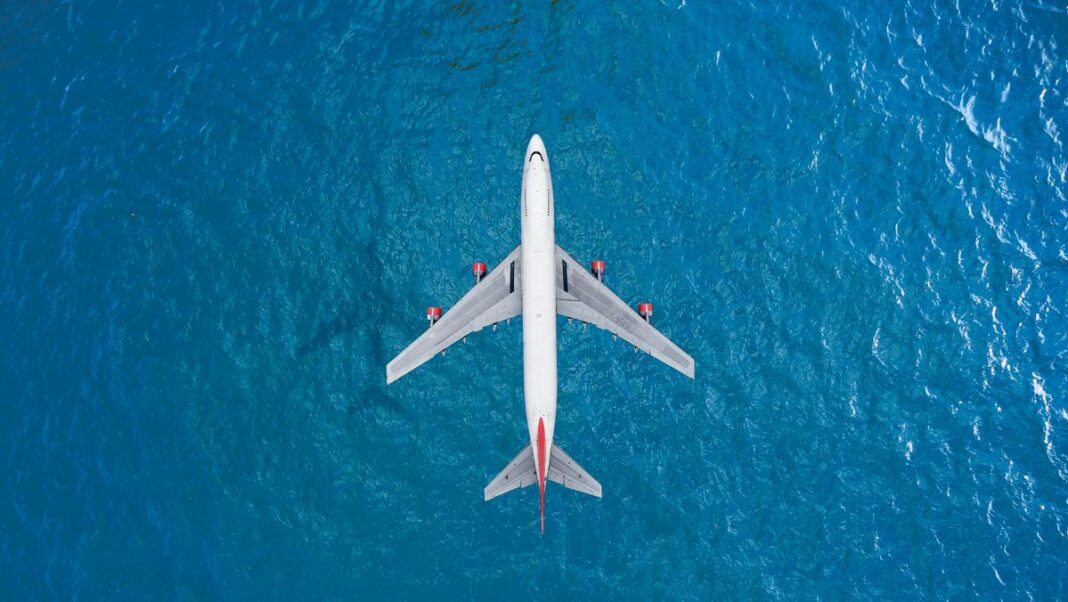

Veteran aviator Steve Schreiber, hailing from New Orleans, has garnered a significant online following by leveraging his expertise to address common passenger inquiries and alleviate the anxieties of nervous travelers. Recently, he responded to a fan’s query about potential mid-flight issues over the Atlantic.
The concerned passenger inquired, “What happens if there’s a problem mid-flight over the vast Atlantic with no nearby assistance?” Captain Schreiber promptly reassured, emphasizing that pilots undergo rigorous training to handle such situations effectively.
On TikTok, he further explained that each aircraft traversing the Atlantic is assigned a designated ‘track’ to ensure safe spacing not only in front and behind but also laterally and vertically.
While these tracks primarily aim to maintain safe distances between planes, they are strategically positioned near appropriate airports for emergency diversions along the flight path.
Schreiber clarified, “Some tracks extend far north near Iceland and Greenland, providing diversion options. Scotland, Ireland, and the Maritimes in Newfoundland are additional alternatives within a two-hour reach.”
He added, “Even on a southern track away from these airports, the Azores are typically within a two-hour flight radius.”
Detailing the mid-Atlantic region, Schreiber noted, “At 30 West, which marks the transition between oceanic controllers, you are typically at the furthest distance from land.”
Despite this seemingly remote segment of the journey, pilots diligently prepare for any potential issues, ensuring a safe and efficient flight for passengers.
Concluding his insights, Schreiber remarked, “We continually monitor fuel levels, systems, and weather conditions. Planning for alternate routes efficiently is ingrained in our training. So, relax, enjoy your beverage, and rest assured, you are in good hands.”