



This week on Quirks & Quarks with Bob McDonald:
The reason geneticists deployed a drone into a cloud of whale snot
When humpback whales exhale, they expel approximately 90% of the air from their lungs in under a second, sending a mist of mucus soaring up to four meters high. Researchers have previously collected this mucus to analyze proteins, hormones, bacteria, and viruses. Now, for the first time, a group of scientists has successfully mapped complete genomes from the exhalations of humpbacks. Eadin O’Mahony, a marine biologist and geneticist affiliated with the North Coast Cetacean Society in British Columbia and St. Andrews University in Scotland, collaborated with the Gitga’at First Nation to utilize petri dishes attached to drones to hover over 26 humpback whales. This innovative technique proved as effective as conventional methods, also capturing DNA from microorganisms residing in the whale’s respiratory system. The findings were published in the journal Molecular Ecology Resources.

Researchers used petri dishes attached to commercially available drones to collect genetic samples from 26 humpback whales as they surfaced. (North Coast Cetacean Society)
Potatoes may be featured on astronauts’ menus at future lunar bases
Establishing a base on the moon presents numerous challenges, with one of the primary concerns being how to sustain the inhabitants with food. The lunar surface is coated with a fine dust known as regolith, which is not particularly suitable for cultivating crops. Nonetheless, Aymeric Goyer, a plant biologist at Oregon State University, and his team have successfully grown potatoes using a combination of simulated lunar regolith and organic compost, suggesting that by 2040, potatoes could potentially be cultivated in space. Their research was documented in npj Microgravity.

At Oregon State University, researchers are cultivating potatoes in a blend of simulated lunar soil and organic matter from Earth. (Oregon State University)
Spiders in slumber exhibit signs of REM-like sleep
For the first time, researchers have observed sleep patterns in a spider. A team that included behavioral ecologist Nadja Geiger from the University of Bonn sought to determine if spiders sleep similarly to humans and other animals, moving through various sleep phases. By analyzing high-definition footage of the Australian jumping spider Portia fimbriata, the researchers discovered that these spiders experience genuine, regulated sleep with two distinct stages, including a REM-like phase characterized by eye movements and muscle contractions. The study was published in the journal PNAS.
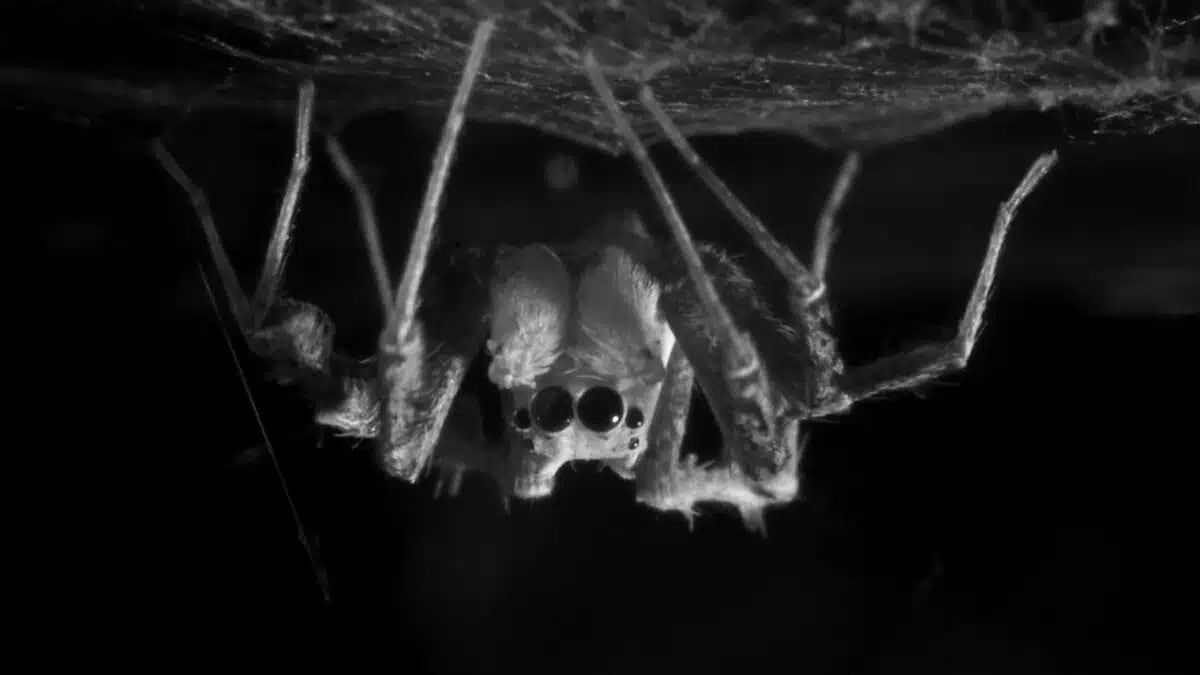
The spider Portia fimbriata resting in a suspended position beneath its web. (Daniela C. Rößler)
Ancient rocks indicate the onset of plate tectonics occurred 2.6 billion years ago
Massive rock slabs, referred to as tectonic plates, move around our planet, interacting with one another through collisions or separations. These movements can result in catastrophic earthquakes or volcanic activity, elevate mountain ranges, and shape both continents and oceans. However, Earth was not always so dynamic. In a recent study published in the journal Proceedings of the Royal Society A, scientists analyzing ancient rocks discovered a chemical signature that indicates when this tectonic activity began, laying the groundwork for life on Earth. Janne Liebmann, a geochemist from Curtin University in Australia, and her team observed that this signature was present in rocks dating back to 2.6 billion years ago before it vanished, marking the dawn of plate tectonics.

Janne Liebmann and a fellow researcher collecting rock samples in the Western Australian outback. (Bryant Ware)
Animal communication signals exhibit a shared rhythm
Male fireflies synchronize their light flashes to capture the attention of females. However, a study examining this synchronized behavior took an unexpected turn when researchers observed that the flashing patterns appeared to align with the chirps of nearby crickets. Guy Amichay, an applied mathematician at Northwestern University, became particularly fascinated upon discovering that most musical compositions adhere to a similar tempo. In a recent investigation published in PLOS Biology, Amichay and his team found that various animal communication signals cluster around a frequency “hotspot” of approximately two beats per second. Co-author Vijay Balasubramanian, a theoretical physicist and computational neuroscientist at the University of Pennsylvania, noted that neural circuits function at a comparable rhythm, implying that animal brains might be tuned to recognize signals at a specific pace.
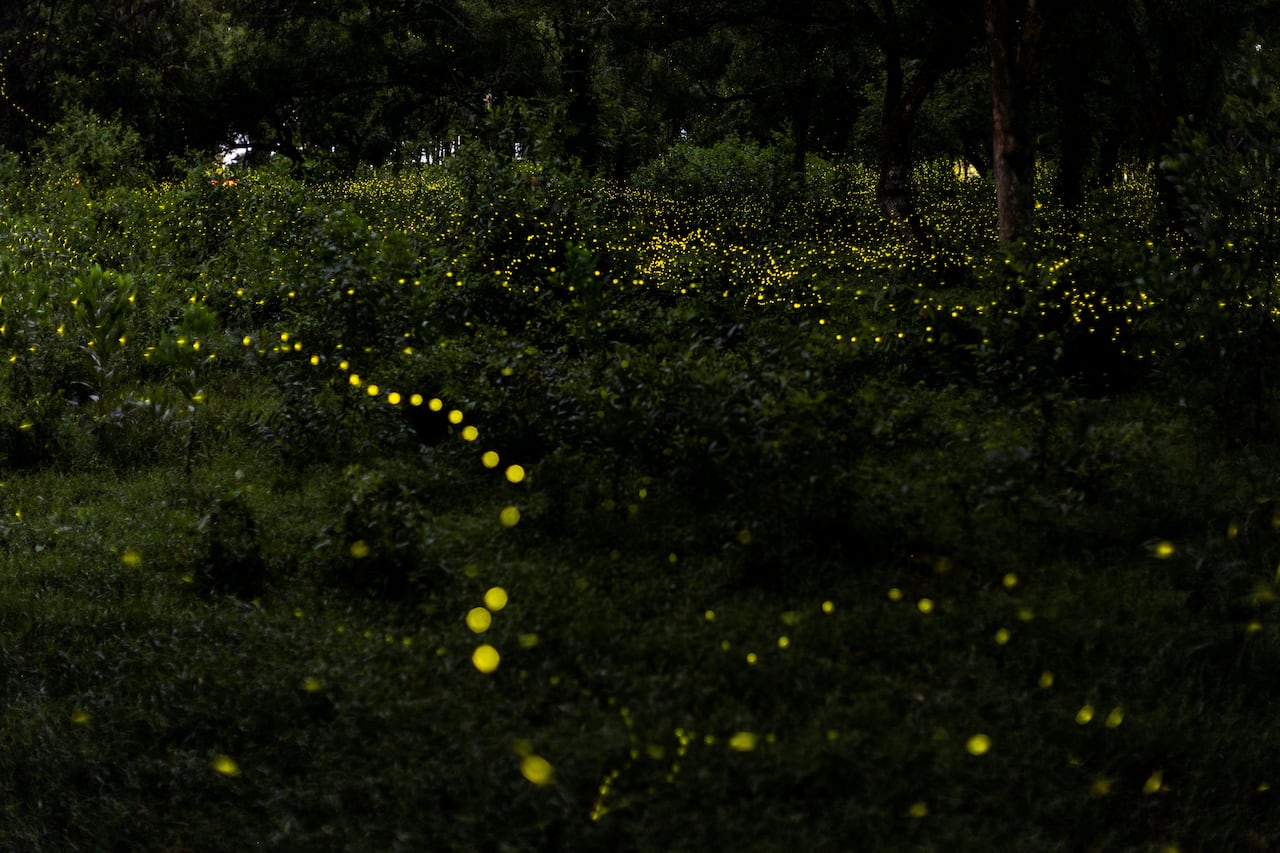
Researchers observing firefly groups in Thailand found that crickets were chirping in synchronization with the flashing of the fireflies. (Athit Perawongmetha/Reuters)
Tag: rewrite-pending