
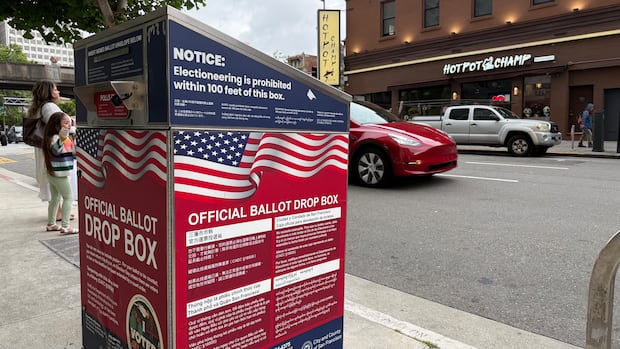

For several months, U.S. President Donald Trump has been attempting to implement new limitations on mail-in voting, a method that nearly one-third of American citizens utilize during elections.
However, with the important midterm elections approaching in less than seven weeks, the U.S. Supreme Court has stopped a plan from the Trump administration that might have prevented millions from voting by mail. Here’s what you should know.
How significant is mail-in voting in the U.S.?
Millions of Americans rely on mail-in ballots to participate in both presidential and midterm elections.
The percentage of Americans voting by mail grew steadily throughout the 2010s, reaching 25 percent in 2018, and then jumped to 43 percent in 2020 due to the COVID-19 pandemic.
Approximately 30 percent of the 158 million votes cast in the 2024 presidential election were through mail-in ballots, as reported by the U.S. Election Assistance Commission’s official report.
These statistics are significantly higher than the rate of mail voting in federal elections in Canada.
A report from Elections Canada indicates that a record 1.25 million individuals cast their ballots by mail in the 2025 general election using the special ballot process, which only amounts to 6.3 percent of nearly 20 million total ballots cast nationwide.

What concerns does Trump have regarding mail-in voting?
Trump has expressed outrage towards states that broadened access to mail-in voting for the 2020 presidential election and subsequently alleged without proof that he was robbed of the election due to fraud, with mail-in voting being central to his accusations.
Instances of fraud in mail-in voting are extremely rare, occurring in about four cases per 10 million mail-in ballots cast, according to studies from the Brookings Institution, a non-partisan think tank based in Washington.
Since his return to the White House last year, Trump’s grievances have primarily centered on unverified claims that mail-in ballots make it simpler for numerous non-citizens to illegally vote and assist Democrats in winning elections.
Who utilizes mail-in voting?
Although millions of registered Republicans — including Trump himself — have chosen to vote by mail in previous elections, there is evidence suggesting that limiting mail-in ballots could benefit Republicans in closely contested congressional races and swing states.
Research from the MIT Election Data Lab and the Pew Research Center indicates that registered Democrats were more inclined to vote by mail in 2020 and 2024, although this gap narrowed during the most recent presidential election.
The findings also show that Americans aged 65 and older are the demographic most likely to opt for mail-in voting.
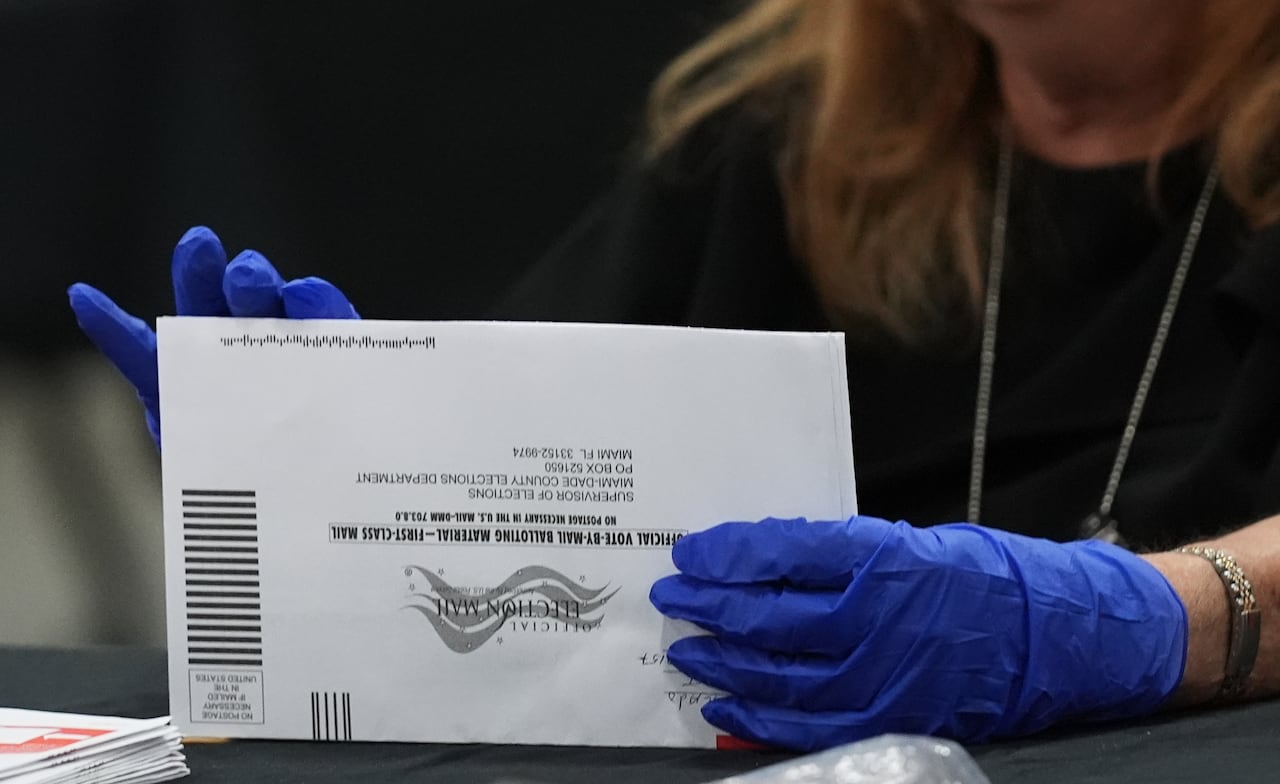
An election worker in Miami-Dade County sorts mail-in ballots for the Florida primary held on August 18. (Lynne Sladky/The Associated Press)
How did Trump attempt to limit mail-in ballots?
Trump’s strategy aimed to empower the U.S. Postal Service — a federal entity overseen by the administration — to determine voters’ eligibility for mail-in ballots.
This move would have altered the U.S. electoral framework, where states retain the legal authority to manage and conduct elections.
In March, Trump issued an executive order instructing the Department of Homeland Security and the Social Security Administration to compile lists of U.S. citizens eligible to vote.
Consequently, Trump’s order mandated the postal service to distribute ballots solely to individuals on the lists and to establish a system for monitoring who voted by mail.
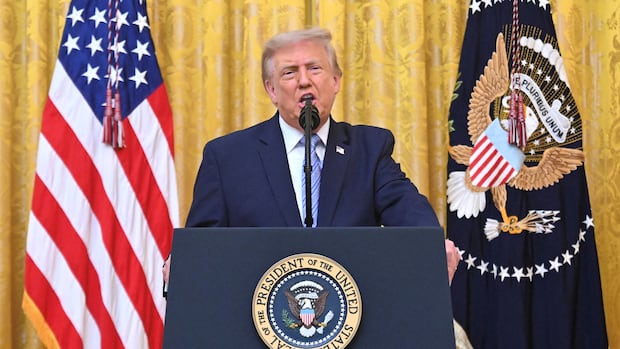
Prominent Democrats strongly criticized President Donald Trump’s national address on voting security and his assertions of widespread Chinese election interference, viewing it as an effort to manipulate the midterms.
The initiative would have also compelled states to alter their ballot designs to comply with new postal service regulations, which many states stated would be unfeasible to implement in time for the election, potentially disenfranchising individuals who wished to vote by mail.
In response, states led by California initiated a legal challenge, and a federal judge issued a series of injunctions against the plan. On Monday, in an emergency decision, the Supreme Court rejected the administration’s request to lift the injunction.
What was Trump’s response to the ruling?
In a lengthy statement on his Truth Social platform on Tuesday, Trump lamented what he referred to as the “completely CORRUPT and out of control Mail-In voting ‘disaster,’ which is a laughing stock all over the World.”
He criticized the ruling from the court as terrible and asserted that it “makes cheating … a much easier thing to do.”
He further condemned the court for making “some of the most destructive, hurtful, and damaging decisions in our Country’s history.”
All three of the justices appointed by Trump during his first term voted against the administration’s request in this matter.
What are the next steps?
While the Supreme Court ruling seems to allow mail-in voting for the upcoming November midterm elections to proceed as normal, this may not be the last time Trump addresses the issue.
If the Republicans lose their majority in the House or the Senate during the midterms, voter rights organizations have expressed concerns that Trump may seek to undermine the credibility of the election results.
-
CBC Explains
Your guide to the U.S. midterms, and why they’re crucial for Donald Trump
-
U.S. Supreme Court rejects Trump’s bid to restrict mail-in ballots ahead of November midterms
Attorney General Todd Blanche stated to reporters on Tuesday that the administration’s attempts to limit mail-in voting are aimed at preserving the integrity of the electoral process.
Trump’s “commitment to ensuring that we uphold free and fair elections will not cease in November or afterward,” said Blanche, who served as the president’s defense attorney in the criminal case alleging he attempted to interfere with the 2020 presidential election.