
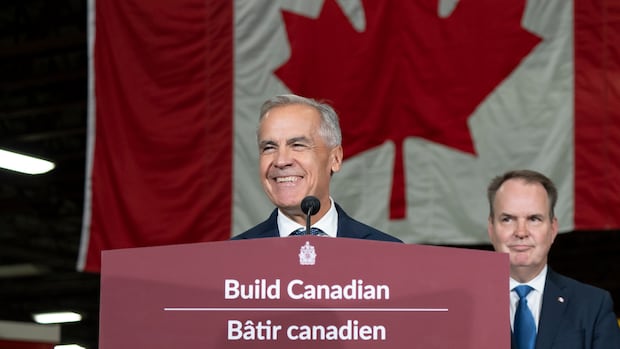

Prime Minister Mark Carney has refuted recent statements made by U.S. cabinet members challenging the Liberal government’s justification for withdrawing from trade discussions last month. In a speech in Thunder Bay, Ontario, Carney expressed his disregard for appointed, unelected U.S. cabinet members’ expertise on Canadian politics.
Following the decision to recall Canada’s negotiating team to Ottawa on August 21, Carney and Canada’s chief trade negotiator Janice Charette have consistently maintained that Canada exited the talks due to last-minute unjust and economically unfavorable changes introduced by the U.S. These changes were perceived to limit Canada’s ability to engage in trade agreements with other nations, weaken cultural protections for the French language, and harm the auto industry in the long run.
Carney highlighted that the U.S. abruptly shifted its stance from rigid demands to a more flexible approach, seemingly disregarding Canadian language and culture aspects they previously insisted on including in the deal. This contradicts the narrative presented by the Trump administration following the breakdown of negotiations.
U.S. Commerce Secretary Howard Lutnick accused Canada of politicizing the situation and disregarding concerns over the French language. He claimed that the issue was fabricated to influence elections in Quebec and Alberta. Additionally, U.S. Trade Representative Jamieson Greer disputed Ottawa’s claims that late U.S. demands disrupted the trade talks.
Carney emphasized that Canada’s return to negotiations with the U.S. hinges on ensuring a lasting deal that benefits both countries. He asserted the importance of recognizing Canada’s red lines, including the protection and promotion of the French language, Canadian culture, and Quebec culture, as well as maintaining sovereignty to engage in trade agreements with other nations.
The prime minister underscored the necessity for a durable agreement that safeguards against potential tariff reinstatements and aligns with the competitiveness of Canada’s auto, steel, and aluminum sectors. Carney urged the U.S. administration to acknowledge the integrated nature of the auto industry across the border.
Despite subsequent social media insults and provocations by Trump administration officials towards Canada, Carney dismissed these attacks, deeming such behavior inappropriate for senior U.S. officials.