
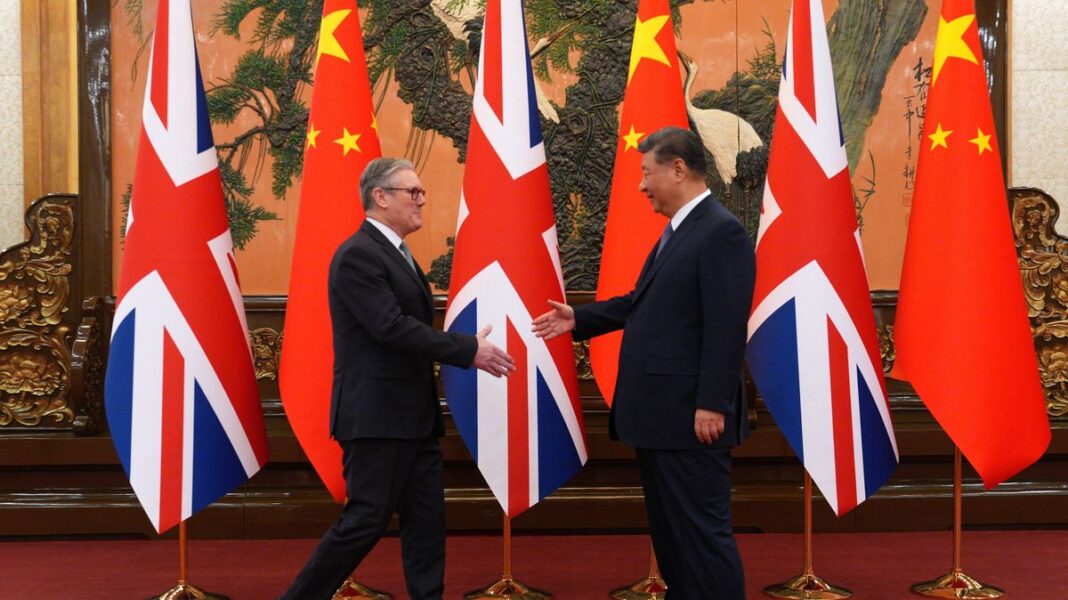

Keir Starmer showcased adept maneuvering during his recent meeting with Chinese President Xi Jinping. Despite differing football team allegiances, the UK Prime Minister engaged in a friendly discussion with President Xi about Arsenal’s recent loss to Manchester United. Presenting a signed match ball as a diplomatic gesture, Starmer cleverly bridged the conversation.
President Xi, known for his support of Manchester United, expressed admiration for the Premier League and showed interest in teams such as Manchester City, Arsenal, and Crystal Palace. Acknowledging Starmer’s enthusiasm for five-a-side football, President Xi also complimented the UK leader on his own sporting abilities.
This seemingly casual exchange at their meeting in Beijing may appear insignificant, yet it carries subtle implications. The relationship between the UK and China has been strained in recent years. While previous leadership emphasized a “Golden Era” in relations, subsequent tensions arose due to concerns over Chinese espionage, human rights abuses, and national security.
Recognizing the economic significance of China as the world’s second-largest economy, Starmer aims to strengthen ties with Beijing. Amidst global uncertainties caused by shifting alliances and trade challenges, fostering a closer relationship with China could bring economic benefits to the UK, aiding in revitalizing the economy and alleviating cost-of-living pressures.
The UK is not alone in seeking to mend ties with China amidst the current geopolitical landscape. Recent discussions between Starmer and President Xi marked a significant shift from their initial formal meeting in 2024, extending to extensive talks and a private luncheon. The leaders engaged in discussions on various topics, culminating in agreements for enhanced cooperation and mutual benefits.
Despite the cordial atmosphere, underlying complexities persist. Allegations of Chinese espionage in the UK, including within governmental structures, have prompted cautious measures such as staff using secure communication methods. Pressure mounts on Starmer to leverage diplomatic influence in addressing human rights concerns, including advocating for the release of British pro-democracy activist Jimmy Lai.
Challenges such as the treatment of Uyghur Muslims and Beijing’s sanctions on UK officials critical of its policies underscore the delicate balance in UK-China relations. Starmer’s strategic approach aims to navigate these complexities, recognizing the risks involved while emphasizing the importance of engagement with China for mutual interests and global stability.