
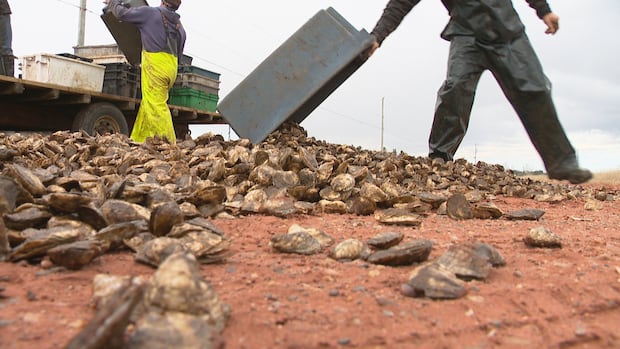

An oyster farmer in Prince Edward Island (P.E.I.) is expressing deep concern over the dire situation facing the industry, referring to it as a “massacre.” Kaila Richard, who now manages the oyster farm in Dock River near Alberton with her husband Bruce Richard following her father’s passing, revealed that heavy financial investments to enhance the farm are now at risk due to the devastating impact of two diseases affecting the Island’s oyster industry.
The diseases, known as MSX and dermo, were first identified in P.E.I. waters in 2024 and 2025, respectively. Despite being harmless to humans, these parasites have caused significant losses, with some farmers experiencing up to 100% mortality rates among their oyster populations.
The provincial and federal governments have initiated support programs, including financial aid, mental health assistance, and the approval of disease-resistant oyster seed imports. While the hope is to replenish oyster stocks, the cultivation process takes a minimum of three years with no guaranteed success, emphasizing the urgent need for sustained financial backing to ensure the survival of affected farmers.
The lack of immediate financial support has raised concerns among farmers, with Bruce Richard stressing the critical need for assistance to prevent long-term financial strain. Jeff Noye, an oyster grower and mayor of Tyne Valley, emphasized the significance of oyster farming as a way of life on the island, expressing fears that without adequate support, larger corporations could take over, jeopardizing the independent nature of the industry.
Peter Warris of the P.E.I. Aquaculture Alliance highlighted the necessity for extended financial aid to safeguard individual farmers and help the industry recover. He emphasized the importance of preventing farmers from selling out at reduced prices due to financial pressures.
Meanwhile, wild oyster fishers are also grappling with the diseases, prompting the federal government to introduce a buyback program for fishing licenses. However, concerns have been raised about the effectiveness of such initiatives in revitalizing the industry.
As the industry faces an uncertain future, stakeholders are calling for continued government support and innovative solutions to navigate the crisis and ensure the long-term sustainability of the oyster sector. The emotional toll on farmers and the industry’s deep-rooted significance in the community underscore the urgent need for coordinated efforts to overcome the challenges ahead.