
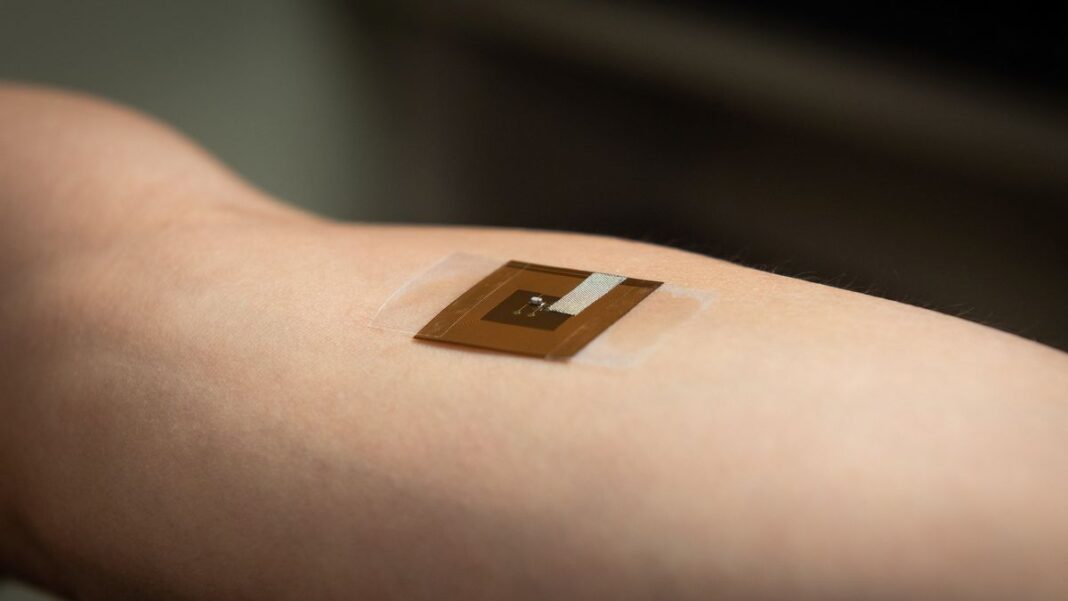

A new innovative wearable patch has been created to detect early signs of the deadliest form of skin cancer. This wireless device enables individuals to conduct self-screening at home, potentially identifying melanoma sooner and reducing the need for unnecessary biopsies, as per researchers.
Developed by American experts, the battery-free patch aims to make screening more convenient and less intrusive. They emphasized that skin cancer, particularly melanoma, poses a significant threat among all types of the disease.
Melanoma UK estimates that over 19,000 individuals in the UK will receive a melanoma diagnosis by 2025. Early detection plays a crucial role in successful treatment, but current methods, mostly reliant on visual examination, can be subjective and may miss important early warning signs.
The lead developer, Dr. Mohammad Moghimi, explained that the patch measures the bioimpedance of skin lesions in a simple, non-invasive manner. Bioimpedance signifies how easily electrical signals travel through living tissue, with cancerous areas displaying distinct electrical properties compared to healthy skin.
The team at Wake Forest University School of Medicine in North Carolina engineered a flexible, chip-less, and battery-free patch that adheres directly to the skin and communicates wirelessly with a small reader device. In a trial involving 10 volunteers, the patch effectively differentiated between healthy and abnormal skin using safe electrical signals to measure bioimpedance.
The patch’s key advantage lies in its battery-free and chip-less design, making it lightweight, disposable, and cost-effective. It provides objective, numerical data about the skin’s health, reducing the need for unnecessary biopsies and assisting healthcare professionals in making informed decisions.
Additionally, the patch offers supplementary information on lesions, complementing other diagnostic techniques such as imaging. It is suitable for all skin tones and can detect changes in small or visually unclear lesions.
Dr. Moghimi, an Assistant Professor of biomedical engineering at Wake Forest, expressed the goal of making early skin cancer detection accessible to all individuals. The team plans to enhance the patch by incorporating conductive hydrogel electrodes for improved performance and comfort, with future plans for larger clinical studies to assess its real-world effectiveness and ability to differentiate between benign and malignant lesions.