
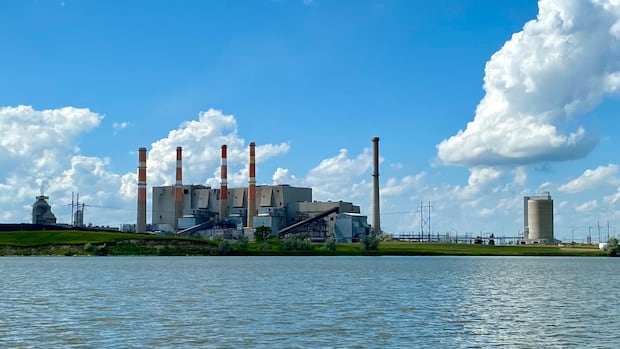

A recent study revealed that the Saskatchewan government’s choice to revamp its coal-fired power plants could lead to expenditures of up to $46.4 billion within the next two decades. This cost projection surpasses the previously leaked internal SaskPower documents estimate of $26 billion over 25 years. Brett Dolter, an associate professor at the University of Regina specializing in economics, conducted an analysis to assess the expenses associated with Saskatchewan’s plan to utilize coal-fired power plants as a transition towards nuclear power and the establishment of Small Modular Reactors (SMRs).
Dolter’s research indicates that retaining the coal plants and integrating a mix of natural gas facilities and renewable energy systems, as initially planned by the province before the policy reversal in early 2025, would be more cost-effective and environmentally friendly than the current strategy. He emphasized the potential savings for individuals amounting to over $800 yearly by opting for the more economical and sustainable approach.
The analysis relied on leaked SaskPower documents disclosed by the Saskatchewan NDP, data submitted to the province’s rate review panel, and certain assumptions due to the lack of public disclosure of the government’s internal analysis. Dolter highlighted that incorporating carbon pricing into the equation further underscores the financial advantages of alternative energy solutions. Sans carbon pricing for heavy emitters, sticking with coal could incur a cost of $30.2 billion over the next two decades.
When discussing the cumulative costs with carbon pricing included, Dolter pointed out that the expenses could skyrocket to $46.4 billion. By applying similar parameters established in Ottawa’s memorandum of understanding with Alberta, Dolter demonstrated that introducing carbon pricing significantly reduces the overall expenses, attributing the cost disparity to the substantial pollution generated by coal plants.
Although the economic implications of Saskatchewan’s current trajectory appear evident, Dolter refrained from speculating on the rationale behind the government’s decision-making process. In response to queries regarding Dolter’s analysis, the provincial government issued a statement reiterating the importance of reliable and affordable electricity in driving Saskatchewan’s ongoing development. The government’s stance aligns with Crown Investments Corporation Minister Jeremy Harrison’s emphasis on a comprehensive approach to meeting the province’s energy demands, focusing on the responsible utilization of local resources alongside the future integration of nuclear energy.
The document filed by SaskPower with the rate review panel asserted potential savings exceeding $21 billion by extending the lifespan of coal plants instead of complying with clean electricity regulations. Despite the province’s earlier commitment to a coal-free future, a shift in policy led to the refurbishment of coal-fired plants in 2025, with an emphasis on preserving jobs that would have been lost if the original plan had been maintained.
Mayor Tony Sernick of Estevan expressed concerns about the potential population decline the city would have faced with the cessation of coal-fired plants. However, following the government’s decision to refurbish the plants and transition towards nuclear energy, Sernick noted a renewed sense of optimism in Estevan, with plans underway for future developments to ensure a more stable progression.
The article also highlighted the financial and legal risks associated with Saskatchewan’s divergence from federal regulations aimed at phasing out coal-fired power. Despite prior commitments to comply with national directives, the provincial government, under Harrison’s leadership, has contested the constitutional validity of federal clean electricity regulations. Dolter cautioned that disregarding these regulations and carbon pricing could expose the province to legal challenges, potentially resulting in substantial financial losses if forced to shut down the refurbished coal plants post-investment.