

If left to develop without oversight, artificial intelligence could pose a deadly threat — a chilling message that Yoshua Bengio, a leading figure in AI, has been emphasizing for years.
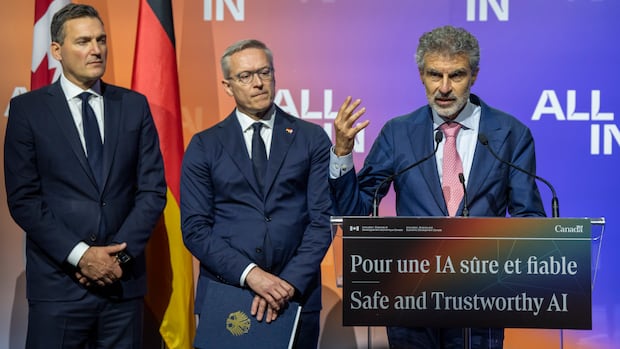
On Wednesday, alongside officials from the Canadian and German governments, a joint announcement was made revealing over $250 million in funding aimed at assisting the Canadian AI expert in addressing this danger.
Bengio is working on constructing a new type of AI model known as Scientist AI, designed with safety as a core principle. This model aims to concentrate solely on objective truths and comprehend facts without striving for its own objectives, such as satisfying its human operators. Additionally, it could serve as a protective measure for other AI systems.
The Canadian federal government is contributing $150 million to LawZero, a non-profit organization founded by Bengio in Montreal last year to develop models like Scientist AI. This marks the first instance of federal support for the organization, with Germany adding another 100 million euros to the effort.
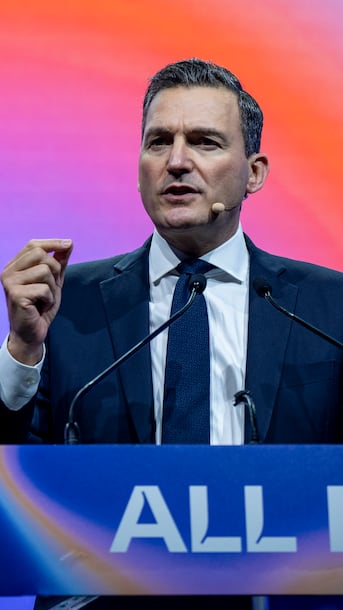
Canada and Germany will combine their efforts with an investment of up to $300 million CAD into a non-profit organization established by Canadian computer scientist Yoshua Bengio named LawZero. This initiative aims to aid in the creation of a new type of safe AI as part of Canada’s efforts towards achieving ‘sovereign AI capability,’ according to Artificial Intelligence Minister Evan Solomon.
“I undertake this with a sense of urgency deeply felt within me, as I wish for my children and grandchildren to have a promising future,” Bengio expressed at the All In conference, a significant event for AI leaders happening in Montreal this week.
Apprehensions about the dangers posed by AI have been escalating, particularly after a departing researcher from Anthropic — an AI company considered a leader in the field — cautioned that AI might potentially eliminate humanity within the next ten years.
In a recent Bloomberg interview, Prime Minister Mark Carney advocated for an international, independent body to oversee and alleviate the risks associated with the technology.
-
Read more about LawZero: Can AI safeguard us against AI? One of its Canadian pioneers thinks so
-
Exclusive
Draft federal AI strategy aims to scale up adoption, offer literacy training by 2031
-
OpenAI flags 6 new examples of ‘concerning’ AI behaviour
Minister of Artificial Intelligence Evan Solomon stated that the funding for LawZero is part of Canada’s broader initiative for responsible AI development.
“Our presence here today is not a reaction to the latest headlines, but rather a reflection of our philosophical stance to build in a responsible and safe manner,” he remarked.
Safer by design?
Experts argue that in many respects, the issue is already pressing: addressing challenges such as AI hallucinations and the propagation of misinformation, or executing actions without clear human consent will be immensely difficult.
“Currently, there is no definitive solution to this problem. We possess immensely powerful, even transformative, AI systems,” stated Jaxson Khan, an AI policy and adoption expert at the University of Toronto’s Munk School of Global Affairs.
Both American and Chinese companies are operating highly advanced AI systems, a trend that Khan believes will persist.
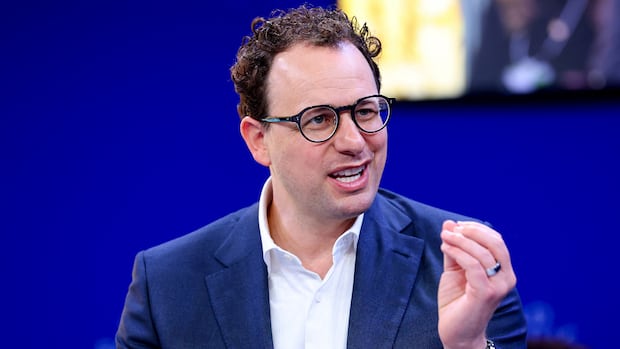
Anthropic CEO Dario Amodei warned that AI development needs to slow down for safety measures to catch up. U.S. President Donald Trump dismissed the risk of artificial intelligence when questioned by reporters.
“Canada currently finds itself in a situation where we feel we may lack significant control in the realm of AI,” he said.
However, Khan believes that collaborating with Germany to support LawZero is still a significant step forward.
“It’s essential to develop alternatives that are ideally safer by design,” he noted.
“I am eager to see if this approach succeeds, but I regard it as a valuable investment from the government and a beneficial collaboration with Germany.”
Domestic capacity and partnerships
Experts emphasize that forming partnerships with nations that share similar values and objectives is another crucial aspect.
The announcement coincided with the signing of a merger agreement between two AI companies, Canada’s Cohere and Germany’s Aleph Alpha.
“This can be viewed as a capacity-building effort,” remarked Vass Bednar, managing director of the Canadian Shield Institute think-tank, regarding the merger.
-
AI ‘fearmongering’ could harm Canada’s rare opportunity, says top CEO
-
Analysis
One of the world’s biggest AI companies wants a deal with Canada. Is sovereignty the trade-off?
“We do possess the ability to catch up and create alternatives. This belief is essential,” she stated.
“We cannot allow ourselves to become victims of the technology’s inevitability or its associated dangers.”
Khan believes that a multifaceted strategy could lead to positive outcomes.
Bengio asserts that surrendering is not an option.
“Achieving our objectives will not be straightforward,” he acknowledged. “However, if we can influence the world, even slightly, toward a better future for humanity, we must make the effort.”
Tag: rewrite-pending